

Keynote Presentations
ISMB 20th Anniversary Keynote
Presentation Title: Seeing forward by looking back
Room: Grand Ballroom
Sunday, July 15 - 9:00 a.m. - 10:00 a.m.
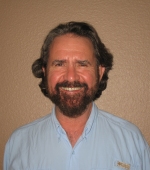
University of California, Irvine
United States
Lawrence Hunter (KN1)
University of Colorado School of Medicine, Denver
United States
Additional Information: Show/Hide
Abstract
The 20 ISMB conferences make intriguing markers for the evolution of our field. From our origins in artificial intelligence (few these days even know that the “IS” in “ISMB” stands for “intelligent systems”) to today’s sprawling conference covering all aspects of computation applied to biology, the people and papers of ISMB can be used to chart the evolution of our field. In this reflection, we will both look back at where we have been, and try extrapolate to where the field may be heading next.
Ph.D., is a Professor in the Department of Computer Science at the University of California, Irvine. He received an undergraduate degree in mathematics from Reed College, a Ph.D. in Artificial Intelligence from MIT, and also holds graduate degrees in computer science and in electrical engineering from MIT. His post-doctoral work was supervised by Patrick Winston and Temple Smith.
Dr. Lathrop's research interests involve applying intelligent systems and advanced computation to problems and data from molecular biology. He co-founded Arris Pharmaceutical Corp. (now Celera Therapeutics) and Coda Genomics, Inc. (now Verdezyne). His research has appeared on the covers of Communications of the ACM, Journal of Molecular Biology, and AI Magazine. He has received a Best Paper Award from the ACM/IEEE Design Automation Conference, an Innovative Application Award from the AAAI/IAAI Conference, a Best Paper Award from the Genome Informatics Conference, and the Professor of the Year award from the UCI Celebration of Teaching. He is a co-inventor of two US patents. He was a founding officer, and is currently a member of the Board of Directors, of the International Society for Computational Biology.
Dr. Lawrence Hunter is the Director of the Computational Bioscience Program and of the Center for Computational Pharmacology at the University of Colorado School of Medicine, and a Professor in the departments of Pharmacology and Computer Science (Boulder). He received his Ph.D. in computer science from Yale University in 1989, and then spent more than 10 years at the National Institutes of Health, ending as the Chief of the Molecular Statistics and Bioinformatics Section at the National Cancer Institute. He inaugurated two of the most important academic bioinformatics conferences, ISMB and PSB, and was the founding President of the International Society for Computational Biology. Dr. Hunter's research interests span a wide range of areas, from cognitive science to rational drug design. His primary focus recently has been the integration of natural language processing, knowledge representation and machine learning techniques and their application to interpreting data generated by high throughput molecular biology.
ISCB Overton Prize Lecture
Ziv Bar-Joseph (KN2)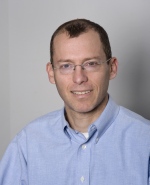
Lane Center for Computational Biology and Machine Learning Department
Carnegie Mellon University
United States
Presentation Title: Data integration for understanding dynamic biological systems
Room: Grand Ballroom
Sunday, July 15 – 4:30 p.m. – 5:30 p.m.
Additional Information: Show/Hide
Ziv Bar-Joseph is an Associate Professor in the Lane Center for Computational Biology and the Machine Learning Department at the School of Computer Science at Carnegie Mellon University. His work focuses on the analysis and integration of static and temporal high throughput biological data for systems biology. Based primarily on methods from machine learning, his group develops computational solutions to problems ranging from experimental design to data analysis, pattern recognition and the reconstruction of dynamic biological networks within and across species. More recently he has also worked on improving algorithms for distributed computational networks by relying on our increased understanding of how biological systems operate and what makes them robust and adaptable. Dr. Bar-Joseph has been the co-chair of the RECOMB meeting on Regulatory Networks and Systems Biology in the past two years and he is currently on the editorial board of Bioinformatics. He received his Ph.D. from the Massachusetts Institute of Technology (MIT) and is a recipient of the DIMACS-Celera Genomics Graduate Student Award in Computational Molecular Biology and the NSF CAREER award.
Website: http://www.cs.cmu.edu/~zivbj/
Barbara Wold (KN3)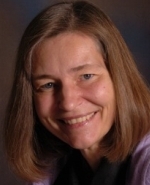
California Institute of Technology, Pasadena
United States
Presentation Title: Analysis of transcriptome structure and chromatin landscapes
Room: Grand Ballroom
Monday, July 16 – 9:00 a.m. – 10:00 a.m.
Additional Information: Show/Hide
Some key consequences and remaining challenges are highlighted. Recent work by the ENCODE consortium is highlighting integrative analysis of diverse genome-wide chromatin data obtained from multiple cell and tissue types. We show that large self organizing maps (SOMs) are effective for chromatin integration, visualization and mining from the end-user biologist's perspective. An ENCODE chromatin SOM illustrates by showing relationships for cell type specific regulatory elements.
Biography
Barbara Wold is the Bren Professor of Molecular Biology and Director of the Beckman Institute at Caltech. In 2011-2012 she will be on leave at the National Cancer Institute to establish its new Cancer Genomics Center. She began working on genome structure and gene regulation during embryo development for her PhD thesis with Eric Davidson, and developed ways to dissect regulatory DNA elements during postdoctoral work at Columbia in Richard Axel’s laboratory. She returned to Caltech to join the Biology faculty in 1981 where she and her students and collaborators study gene and genome function. Recent foci have been developing and then applying new ways to map the inputs and outputs of gene networks in a genomewide manner using “next generation” DNA sequencing (ChIP-Seq, RNA-Seq, single-cell RNA-Seq etc), and applying these methods to gene works that govern mouse and worm myogenesis, T-cell development, and human brain networks.
ISCB Fellows Keynote
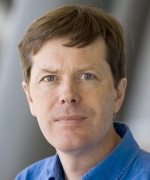 Richard Durbin (KN4)
Wellcome Trust Sanger Institute
Cambridge, United Kingdom
Presentation Title: Progress, challenges and opportunities in population genome sequencing
Room: Grand Ballroom
Monday, July 16 – 4:30 p.m. – 5:30 p.m.
Additional Information: Show/Hide
Abstract:
The dramatic decrease in DNA sequencing costs in the last few years has direct full genome sequence studies of genetic diversity by sequencing multiple individuals. As well as revealing the full genome sequence of a species including variation within the species, rather than just a representative reference sequence, and hence supporting evolutionary and population genetic studies, this also allows phenotype association studies to be extended to all types of genetic variation, not just common variation typed by genotyping chips. However, there are serious
computational complexities in designing studies and analysing the data. These arise both from the random shotgun nature of current sequencing data combined with the repetitive properties of genomes, and from the complex structure of genetic variation arising from mutation, recombination and inheritance, combined of course with the ever-present requirement for efficiency. I will discuss some of the successes in adressing these issues, and some of the outstanding problems, illustrating with results from the 1000 Genomes Project and population sequencing projects from genetic isolates, where we can begin to build a near-complete picture of genetic variation.
Biography
Richard Durbin is joint Head of Human Genetics at The Wellcome Trust Sanger Institute. He has made multiple theoretical and algorithmic contributions to biological sequence analysis, and contributed to the human genome project and development of the Pfam, TreeFam and WormBase data resources. He is currently co-leading the 1000 Genomes Project to produce a deep catalogue of human genetic variation by large scale sequencing, and the UK10K collaboration to extend sequence based genetics to samples with clinically relevant phenotypes, and has renewed interests in genome assembly methods.
Richard has a BA in Mathematics, and a PhD in Biology from Cambridge University. Following postdoctoral research on neural networks at Stanford University, and 6 years at the MRC Laboratory of Molecular at the start of the C.elegans and human genome projects, he moved to the Sanger Institute where he was Head of Informatics from 1992-2006 and Deputy Director from 1997 to 2006. He was elected a Fellow of the Royal Society in 2004 and of ISCB in 2011.
Andrej Sali (KN5) 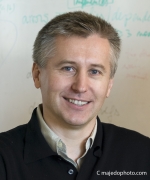
University of California, San Francisco
United States
Presentation Title: Integrative Structural Biology
Room: Grand Ballroom
Tuesday, July 17 – 9:00 a.m. – 10:00 a.m.
Additional Information: Show/Hide
Abstract
Department of Bioengineering and Therapeutic Sciences, Department of Pharmaceutical Chemistry, California Institute for Quantitative Biosciences, Mission Bay Byers Hall 508B, 1700 4th Street, University of California, San Francisco, San Francisco, CA 94158-2330, USA
Our broad goal is to contribute to a comprehensive structural characterization of large macromolecular assemblies. Such a characterization is best achieved by hybrid approaches that integrate data from diverse biochemical and biophysical experiments, such as X-ray crystallography, NMR spectroscopy, electron microscopy, immuno-electron microscopy, footprinting, chemical cross-linking, FRET spectroscopy, small angle X-ray scattering, immunoprecipitation, and genetic interactions. Even a coarse structural characterization is often useful to understand how the assembly functions, how it has evolved, and how it could be modulated, in addition to providing a necessary starting point for a higher resolution description.
We formulate the hybrid approach to structure determination as an optimization problem, the solution of which requires three main components: the representation of the assembly, the scoring function, and the optimization method. The ensemble of solutions to the optimization problem embodies the most accurate structural characterization given the available information. The key challenges remain translating experimental data into restraints on the structure of the assembly, combining these spatial restraints into a single scoring function, optimizing the scoring function, and analyzing the resulting ensemble of solutions. Incompleteness and errors in experimental data are treated using inference-based scoring functions that extract the maximum possible information from the data, following a Bayesian approach with minimal assumptions and approximations. Sampling all model structures consistent with the data is often challenging due to the rugged nature of the scoring function landscape and its many local minima; we are developing a multi-scale sampling method that efficiently divides the complete set of degrees of freedom into potentially overlapping subsets, finds optimal and suboptimal solutions for the subsets independently by traditional optimizers or enumeration, and then combines compatible solutions to obtain guaranteed best-scoring solutions for the whole system.
Our methods are implemented in the open source Integrative Modeling Platform (IMP) package (http://salilab.org/imp). IMP is designed to allow mixing and matching of existing modeling components as well as easy adding of new functionality. It supports a wide variety of assembly representations and input data. We also provide infrastructure that encourages and supports contributions from other laboratories.
IMP will be illustrated by its application to the determination of the molecular architectures of the Nuclear Pore Complex, the 26S proteasome, and the Spindle Pole Body.
Russel D, Lasker K, Webb B, Velazquez-Muriel J, Tjioe E, Schneidman-Duhovny D, Peterson B, Sali A. Putting the pieces together: integrative structure determination of macromolecular assemblies. PLoS Biol 10, e1001244, 2012.
Lasker K, Forster F, Bohn S, Walzthoeni T, Villa E, Unverdorben P, Beck F, Aebersold R, Sali A, Baumeister W. Molecular architecture of the 26S proteasome holocomplex determined by an integrative approach. Proc Natl Acad Sci USA 109, 1380-1387, 2012.
F. Alber, F. Förster, D. Korkin, M. Topf, A. Sali. Integrating Diverse Data for Structure Determination of Macromolecular Assemblies. Annual Review of Biochemistry 77, 443-477, 2008.
F. Alber, S. Dokudovskaya, L. Veenhoff, W. Zhang, J. Kipper, D. Devos, A. Suprapto, O. Karni, R. Williams, B.T. Chait, M.P Rout, A. Sali. Determining the architectures of macromolecular assemblies. Nature 450, 683-694, 2007.
Andrej Sali received his BSc degree in chemistry from the University of Ljubljana, Slovenia, in 1987; and his PhD from Birkbeck College, University of London, UK, in 1991, under the supervision of Professor Tom L. Blundell, where he developed the MODELLER program for comparative modeling of protein structures. He was then a postdoc with Professor Martin Karplus at Harvard University as a Jane Coffin Childs Memorial Fund fellow, studying lattice Monte Carlo models of protein folding. From 1995 to 2002, he was first an Assistant Professor and then an Associate Professor at The Rockefeller University. In 2003, he moved to University of California, San Francisco, as a Professor of Computational Biology in the Department of Bioengineering and Therapeutic Sciences, Department of Pharmaceutical Chemistry, and California Institute for Quantitative Biosciences (QB3). He was a Sinsheimer Scholar (1996), an Alfred P. Sloan Research Fellow (1998), an Irma T. Hirschl Trust Career Scientist (2000), and the recipient of the Zois Award of Science Ambassador of Republic of Slovenia (2007). He is an Editor of Structure and a Founder of Prospect Genomix that merged with Structural Genomix, finally acquired by E. Lilly & Co. Dr. Sali is interested in developing and applying computational methods for determining structures and functions of proteins and their assemblies.
ISCB Senior Scientist Accomplishment Award

Photo Max Brouwers
Stockholm University
Sweden
Presentation Title: The other Third: Coming to grips with membrane proteins
Room: Grand Ballroom
Tuesday, July 17 – 4:30 p.m. – 5:30 p.m.
Additional Information: Show/Hide
Integral membrane proteins account for around 30% of all proteins in most organisms. They are key players (and favored drug targets) in all processes dealing with transport of molecules or ions across cellular membranes, as well as in signal transduction pathways. Yet, our understanding of membrane proteins lags behind that of soluble proteins in almost every respect: biosynthesis, folding, structure, and function. In the past 10 years, however, membrane proteins have progressively moved into the headlines of the molecular life sciences, in a large part thanks to a tight interplay between bioinformatics, computational modeling, and wet-lab work ranging from biophysics to structural biology.
Gunnar von Heijne worked mainly on problems related to protein sorting and membrane protein biogenesis and structure. The work includes both bioinformatics methods development (e.g. methods for prediction of signal peptides and other sorting signals as well as prediction of membrane protein topology) and experimental studies inE. coliand eukaryotic systems. The most important achievements include the discovery of the so-called (-1,-3)-rule (describes signal peptide cleavage sites) and the positive inside rule (describes membrane protein topology), the development of widely used prediction methods (e.g., TopPred, SignalP, TMHMM), and the first quantitative analysis of the energetics of membrane protein assembly in vivo.