
In Memory of Kamalakar-Rao Mettani
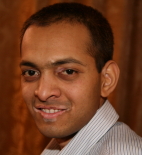 In February 2008, we were saddened to learn that we lost a valued member of our web development team, Kamalakar-Rao Mettani. Kamal was 31 years old and had just finished his Master of Science (M.Sc.) degree at the University of Applied Science Heidelberg, in the department of Computer Science.
 His thesis presented a thorough study of the previous ISCB website and a detailed proposal to increase member benefits by allowing for greater web-based community interactions. Kamal received the university's distinguished honor of best master of science thesis in 2007.
Kamal and his thesis were key to the redevelopment of the ISCB web site, and for several months after receiving his degree, right up until the time of his sudden death, he personally worked with the ISCB staff and leadership to implement his plan. As you look through the new layout and functionality, please know that Kamal's energy and talents are part of every piece of code and design.
We are all proud to have worked with someone who was as bright, conscientious, and professional as Kamal, and know he will be missed dearly by all who knew him.
Therefore, as ISCB launches its new web presence, we dedicate this site to Kamalakar-Rao Mettani.
Most Sincerely,
The International Society for Computational Biology
..........................................................................................................................................................
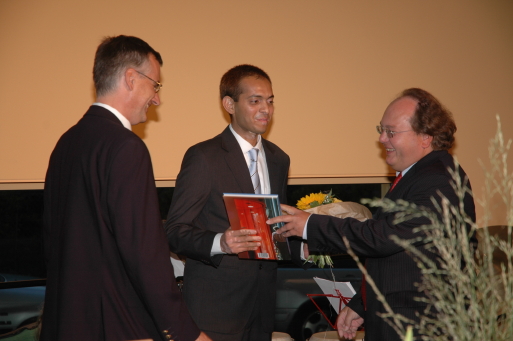 |
| Kamal receives his Master of Science Degree from Professor Gerd Moeckel (SRH Heidelberg) and Dr. Reinhard Schneider (EMBL). |
| |
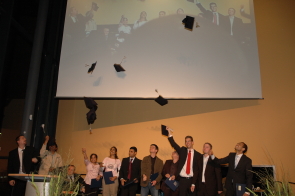 |
| Kamal (pictured on the far right) joins his fellow graduates on stage. |
| TOP |










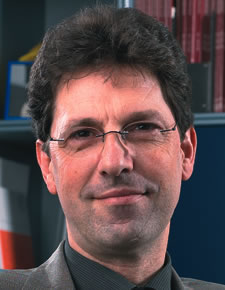 President-Elect – Thomas Lengauer, Department of Computational Biology and Applied Algorithmics, Max Planck Institute for Informatics, Saarbrücken, Germany. Thomas Lengauer, Ph.D. (Computer Science, Stanford University, 1979), Dr. rer. nat. (Mathematics, Free University of Berlin, 1976), is a Director at the Max Planck Institute for Informatics and Adjunct Professor at Saarland University and the University of Bonn. He is a founding member of ISCB and is currently serving as a member of the Board of Directors, in which he served in all years except 2002 to 2005, and of the Executive Committee where he currently serves as Vice President. Lengauer has chaired the ISCB Awards Committee from 2005 to 2007, where he assisted in the development of a revised selection process. He was also Scientific Chair of ISMB 1999 (Heidelberg) and 2007 (Vienna), as well as an Area Chair in several ISMB conferences. Lengauer is a Fellow of our Society. He will be President-Elect from January 2017 to January 2018 and will become President of the Society in January 2018, serving a three-year term. His research interests and activities include structural bioinformatics, molecular docking and computational chemistry, computational epigenetics and bioinformatics for disease, especially, viral resistance analysis.
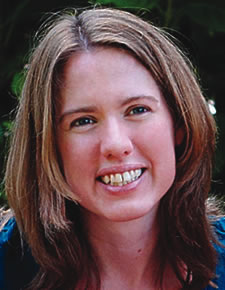 Vice President – Janet Kelso, Bioinformatics Research Group Leader, Department of Evolutionary Genetics, Max Planck Institute for Evolutionary Anthropology, Leipzig, Germany. Janet Kelso, Ph.D. (Bioinformatics, University of the Western Cape, 2003), is a Bioinformatics Research Group Leader and Minerva Professor of Bioinformatics at the Max-Planck Institute for Evolutionary Anthropology. She is currently serving as a member of the ISCB Board of Directors (2005 - present), is the ISCB Conference Council Co-chair, has served on the ISMB Steering Committee since 2006, as well as an ISMB Conference Co-chair in 2014 and 2015. Kelso has played instrumental roles in the development of the ISCB conference series and served on the Executive Committee in both the position of Secretary (2006-2011) and Vice President (2011-2013). Kelso is a Fellow of our Society. She is also the Executive Co-editor for Bioinformatics, and serves on several other editorial boards. Kelso will serve her three-year term as Vice President starting in January 2017. Her research interests span questions in evolutionary and comparative genomics. She has participated in the development of methods for the analysis of ancient DNA and in the analysis of the genomes of archaic and early modern humans. Most recently her group has studied the functional implications of the admixture between humans and Neanderthals.