Sydney Brenner Molecular Science Institute, Salk Institute http://www.molsci.org Sydney Brenner, founder of the Molecular Sciences Institute and distinguished research professor, Salk Institute. Brenner is one of the leading pioneers of genetics and molecular biology and shared the 2002 Nobel Prize in Physiology or Medicine with John Sulston of the Sanger Center at Cambridge University and H. Robert Horvitz of the Massachusetts Institute of Technology. Among his many notable discoveries, Brenner established the existence of messenger RNA. His research with Caenorhabditis elegans garnered insights into aging, nerve cell function, and apoptosis. Most recently, Brenner has been studying vertebrate gene and genome evolution. His work in this area has resulted in new ways of analyzing gene sequences, which has resulted in a new understanding of the evolution of vertebrates.
David Haussler Howard Hughes Medical Institute, University of California at Santa Cruz http://www.cse.ucsc.edu/~haussler/ David Haussler, Howard Hughes Medical Institute Investigator and professor of computer and information sciences, University of California, Santa Cruz. Haussler's research interests include: genomics, bioinformatics, machine learning, statistical decision theory, pattern recognition, neural networks, algorithms and complexity. He is a fellow of the American Association for Artificial Intelligence, a member of the ACM, IMS, AAAS, and the IEEE. He is a past chairman of the Steering Committee for the Computational Learning Theory Conferences, a member of the Working Group on Machine Learning of the International Federation for Information Processing, an Associate Editor for the Journal of Computational Biology, and is an action editor for the journal Machine Learning.
Yoshihide Hayashizaki RIKEN Genomic Sciences Center http://www.gsc.riken.go.jp/e/group/themegenomeE.html Yoshihide Hayashizaki, project director of Genome Exploration Research Group, Genomic Sciences Center, RIKEN. Hayashizaki's research has covered a number of areas in genomic research, most notably the establishment of a Mouse Genome Encyclopedia at RIKEN. From 1988 to 1992, he worked at the National Cardiovascular Center Research Institute in Osaka, where he developed the Restriction Landmark Genome Scanning (RLGS) System. In 1992, Hayashizaki was appointed Project Director for the RIKEN Genome Project in 1995. Hayashizaki currently leads a research group that is working on analyzing gene transcriptional networks using the Mouse Genome Encyclopedia.
W. James Kent University of California, Santa Cruz Winner of the 2003 ISCB Overton Prize http://www.cse.ucsc.edu/~kent/ W. James Kent, Assistant Research Scientist at the University of California, Santa Cruz. W. James Kent is best known as the researcher who “saved” the human genome project, a feat chronicled in the New York Times. With little more than a month before the company Celera was to present a complete draft of the human genome to the White House in 2000, Kent wrote GigAssembler, a program that produced the first full working draft assembly of the human genome, which kept the data freely available in the public domain. Kent’s main scientific goal has been to understand gene regulation by building bioinformatics tools such as his Intronerator system for exploring the genome of C. elegans; the program WABA, one of the first pair-HMMs for alignment of genomic DNA of two species; Improbiser, an expectation-maximization method to discover and cluster potential transcription factor binding sites; and the popular BLAT, which rapidly searches full genomes at both the DNA and protein levels.
John Mattick Institute for Molecular Bioscience, University of Queensland http://www.imb.uq.edu.au/ John Mattick, Director of the Institute for Molecular Bioscience, University of Queensland. Mattick's work covers an interest in genomes and what new understandings can be uncovered from the genomes of organisms that have been completely sequenced. He studies bacterial genomes and higher organisms, specifically their introns. Currently he is investigating alternative splicing and editing of genes and how introns play a part in this process.
David Sankoff University of Ottawa Winner of the 2003 Senior Scientist Accomplishment Award http://www.dms.umontreal.ca/Professeurs/sankoff/ David Sankoff, Canada Research Chair in Mathematical Genomics at the University of Ottawa and a member of the Centre de Recherches Mathématiques at the Université de Montréal. Over the past 30 years, David Sankoff has formulated and contributed to many of the fundamental problems in computational biology. He introduced the quadratic version of the Needleman-Wunsch algorithm, developed the first statistical test for alignments, initiated the study of limit behavior of random sequences, and formulated the multiple alignment problem. With Robert Cedergren, he developed algorithms for folding and alignment of RNAs, and studied evolution of the genetic code. David has developed models for horizontal gene transfer, and methods for optimization of trees and rapid bootstraps. He generalized the nearest-neighbor exchange heuristic, developed consensus and supertree problems, analyzed computational complexity of several phylogeny problems, and developed a general technique for phylogenetic invariants. Over the last 15 years he has focused on the evolution of genomes as the result of chromosomal rearrangement, introducing genomic edit distances, gene order phylogenies, algorithms for analyzing genome duplication and hybridization, and statistical analysis of gene clusters. He is also well-known in linguistics for his methods of studying grammatical variation and change in speech communities, the quantification of discourse analysis, and production models of bilingual speech.
Ron Shamir Tel-Aviv University http://www.math.tau.ac.il/~rshamir/ Ron Shamir, professor of computer science, Tel-Aviv University. Shamir's fields of interest include bioinformatics, graph algorithms, and optimization. Along with teaching a number of courses, Shamir serves on a number of editorial boards. Some current projects in Shamir's group include clustering gene expression data, computational tools for analysis of genetic networks and pathways, designing degenerate primers, and novel applications of DNA Chips.
Michael Waterman University of Southern California http://www-hto.usc.edu/people/Waterman.html Michael Waterman, professor of Mathematics, Computer Science and Biological Science, University of Southern California. Waterman's work focuses on the creation and application of mathematics, statistics and computer science to molecular biology, particularly to DNA, RNA, and protein sequence data. He is the co-developer of the Smith-Waterman algorithm for sequence comparison and of the Lander-Waterman formula for physical mapping. He is a founding editor of Journal of Computational Biology, is on the editorial board of seven journals, and is author of the text Introduction to Computational Biology: Maps, Sequences and Genomes.













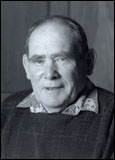 Sydney Brenner
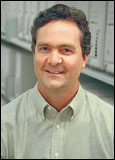 David Haussler
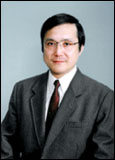 Yoshihide Hayashizaki
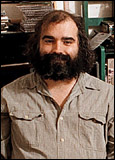 W. James Kent
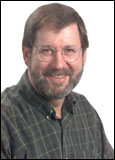 John Mattick
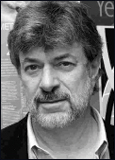 David Sankoff
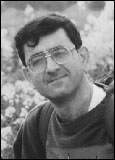 Ron Shamir
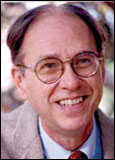 Michael Waterman