










ISMB 2008 Keynote Details
David Jaffe
Eugene W Myers, Ph.D.
Aviv Regev
Morag Park
Bernhard Ø. Palsson
Hanah Margalit
David Haussler
Director, Institute for Genome Sciences
University of Maryland School of Medicine
Baltimore, MD, USA
Presentation Title: Microbial Communities in Health and Disease
Keynote Introduction Provided by: Burkhard Rost
Date: Sunday, July 20
Time: 9:00 a.m.
Room: Hall G
Presentation Abstract: TBD
Biography:
 Claire M. Fraser-Liggett, Ph.D. is Director of the Institute for Genome Sciences at the University of Maryland School of
Medicine in Baltimore, MD. Until 2007, She was President and Director of The Institute for Genomic Research (TIGR) in Rockville, MD,
which has been at the forefront of the genomics revolution since it was founded in 1992. In a landmark publication in 1995, a group of
TIGR investigators reported on the first complete genome sequence of a free-living organism, Haemophilus influenzae. This new approach
changed the way that microbiology has been studied and has, to date, produced DNA sequence data from nearly 1000 different species across
the phylogenetic tree. TIGR quickly became the world's leader in the new field of microbial genomics, attracting significant funding from
the DOE, NIH, and NSF to build this program. Dr. Fraser-Liggett's success with microbial genomics expanded to include work on other organisms,
and TIGR can take credit for playing a key role in the sequencing and analysis of the first plant species, Arabidopsis thaliana, and the first
human pathogenic parasite, Plasmodium falciparum. Dr. Fraser-Liggett's productivity is reflected in the fact that she has authored more than
200 publications, edited three books, and served on the editorial boards of nine scientific journals. For the past 10 years she has been the
most highly cited investigator in the field of microbiology. But just as important as her large number of highly cited papers is the impact
that her body of work has had on our understanding of microbial diversity and evolution. Her contributions to the fields of genomics and
microbiology have been acknowledged by many agencies and professional societies and her list of awards include the E.O. Lawrence Award,
the highest honor bestowed on research scientists by the Department of Energy, the Promega Biotechnology Award from the American Society
of Microbiology, and the Charles Thom Award from the Society for Industrial Microbiology, has been selected as one of Maryland's Top 100
Women Circleof Excellence, and elected as a fellow to the American Academy of Microbiolgy and the American Association for the Advancement
of Science. She has served on many advisory panels for all of the major Federal funding agencies, the National Research Council, the
Department of Defense, and the intelligence community. In addition, she has contributed her time as a Board member for universities,
research institutes, and other non-profit groups because of her commitment to the education of our next generation of scientists. She
received her undergraduate degree summa cum laude from Rensselaer Polytechnic Institute and her Ph.D. in Pharmacology form the State
University of New York at Buffalo.
Claire M. Fraser-Liggett, Ph.D. is Director of the Institute for Genome Sciences at the University of Maryland School of
Medicine in Baltimore, MD. Until 2007, She was President and Director of The Institute for Genomic Research (TIGR) in Rockville, MD,
which has been at the forefront of the genomics revolution since it was founded in 1992. In a landmark publication in 1995, a group of
TIGR investigators reported on the first complete genome sequence of a free-living organism, Haemophilus influenzae. This new approach
changed the way that microbiology has been studied and has, to date, produced DNA sequence data from nearly 1000 different species across
the phylogenetic tree. TIGR quickly became the world's leader in the new field of microbial genomics, attracting significant funding from
the DOE, NIH, and NSF to build this program. Dr. Fraser-Liggett's success with microbial genomics expanded to include work on other organisms,
and TIGR can take credit for playing a key role in the sequencing and analysis of the first plant species, Arabidopsis thaliana, and the first
human pathogenic parasite, Plasmodium falciparum. Dr. Fraser-Liggett's productivity is reflected in the fact that she has authored more than
200 publications, edited three books, and served on the editorial boards of nine scientific journals. For the past 10 years she has been the
most highly cited investigator in the field of microbiology. But just as important as her large number of highly cited papers is the impact
that her body of work has had on our understanding of microbial diversity and evolution. Her contributions to the fields of genomics and
microbiology have been acknowledged by many agencies and professional societies and her list of awards include the E.O. Lawrence Award,
the highest honor bestowed on research scientists by the Department of Energy, the Promega Biotechnology Award from the American Society
of Microbiology, and the Charles Thom Award from the Society for Industrial Microbiology, has been selected as one of Maryland's Top 100
Women Circleof Excellence, and elected as a fellow to the American Academy of Microbiolgy and the American Association for the Advancement
of Science. She has served on many advisory panels for all of the major Federal funding agencies, the National Research Council, the
Department of Defense, and the intelligence community. In addition, she has contributed her time as a Board member for universities,
research institutes, and other non-profit groups because of her commitment to the education of our next generation of scientists. She
received her undergraduate degree summa cum laude from Rensselaer Polytechnic Institute and her Ph.D. in Pharmacology form the State
University of New York at Buffalo.
Director for Computational Research and Development (CRD)
Genome Sequencing and Analysis Program
Broad Institute of MIT and Harvard, Cambridge, MA, USA

Presentation Title: Tiny bits and pieces: new sequencing technologies and what they can do for you
Keynote Introduction Provided by: Tom Hudson
Date: Sunday, July 20
Time: 4:45 p.m.
Room: Hall G
Presentation Abstract:
The latest generation of DNA sequencing technologies (including Illumina-Solexa, AB-SOLiD) generate reads at dramatically reduced per-base cost, but the reads are very short
(25-50 bp), making them difficult to use. Here we describe three applications demonstrating the utility of these tiny reads:
1. Epigenomic state. Tiny reads selected by chromatin immunoprecipitation can be aligned back to the genome, thereby enabling the generation of genome-wide maps of chromatin state, one for each possible histone modification in each cell type. We show that these maps not only predict transcriptional activity of particular genes, but also the possible transcriptional states of those genes in derived cells.
2. Polymorphism discovery. We show that for a given bacterial strain, virtually all differences with another 'reference' strain can be identified using a single lane of Illumina reads. These differences include insertions much longer than the reads and more complex changes. In addition, given two strains that differ by a single mutation, with one lane of data from each, the same algorithm will find the mutation, while reporting no other changes. This method can be used to pinpoint the site of action of an antibiotic.
3. Genome assembly. We generated 26 and 36 base Illumina paired reads from several bacterial and fungal genomes of size up to 40 Mb, then assembled them using a new algorithm ALLPATHS, yielding high-quality assemblies. These assemblies are graphs, in which branches represent ambiguity intrinsic to the data, e.g. from polymorphism, or from long homopolymers whose exact length cannot be ascertained from the data. The edges in these graphs are generally > 100 kb and usually have no errors. The aggregate error rate is less than 1 per 105 bases. For example, we assembled S. aureus, yielding a graph having N50 edge size 0.2 Mb, N50 component size 0.4 Mb, and N50 scaffold size 1.1 Mb. This assembly covers 99.4% of the genome.
Biography:
 David Jaffe is the Director for Computational Research and Development (CRD) in the Genome Sequencing and Analysis Program. The CRD group works on analytical and computational aspects of genome sequencing, from getting the most out of the laboratory process, to getting the data into a form that can answer biological questions. The group works both on long reads from Sanger-chemistry ABI technology, and on tiny reads from novel sequencing technologies such as Illumina-Solexa and ABI-SOLiD.
Applications worked on by the group include detection of differences, for genomes for which there is a similar reference, and de novo assembly, for genomes for which there is not. For example, the group has used tiny reads to detect differences between TB strains isolated from patients and a reference strain. The group has been developing assembly algorithms for seven years and has applied them to about a hundred genomes, including many mammals, fungi, and disease vectors. The dramatically lower cost of data from new technologies has enabled a whole host of other biological applications, that the group is actively supporting, including ChIP-Seq, bisulfite sequencing, directed evolution, and sequencing of exons.
David's background is in mathematics: algebraic geometry and error-correcting codes. He received his PhD from the University of California (Berkeley) in 1987 and was Professor at the University of Nebraska (Lincoln) before coming here in 2000. He was initially funded by an NHGRI K01 "retraining" grant and is currently principal investigator of an NHGRI R01 grant in genome assembly.
Presentation Title: Imaging Bioinformatics
Keynote Introduction Provided by: Jill Mesriov
Date: Monday, July 21
Time: 9:00 a.m.
Room: Hall G
Presentation Abstract:
Arguably the most significant contribution of the human genome project is that we can now build a recombinant construct of every gene and every promotor in C. elegans (worm), D. melanogaster (fly), M. musculus (mouse), and H. sapiens (human). These include fluorescent proteins and other markers that can be induced at controlled time points via a change in temperature, light, or chemistry. Combined with tremendous advances in light and electron microscopy in recent years, I believe we are now poised to visualize the meso-scale of the cell, and the development small organs (e.g. a fly's brain) and organisms (e.g. the worm) at the resolution of individual cells. These advances will require new imaging and data-mining methods for what I call "imaging bioinformatics". Toward this end, my group is working on a number of imaging projects along these lines. These include (a) studies of development and gene expression in worms and flies, (b) the biophysics of mitosis, and (c) the construction of a detailed reconstruction of a fly's brain. We describe preliminary results and extrapolate on what we hope to be able to infer from such data.
Biography:
 Gene Myers is a group leader at the new Janelia Farm Research Campus of the Howard Hughes Medical Institute. Gene came to the JFRC from
UC Berkeley in late 2005 where he was on the faculty of Computer Science. He was formerly Vice President of Informatics Research at Celera
Genomics from 1998 to 2002 where he and his team determined the sequences of the Drosophila, Human, and Mouse genomes using the whole genome
shotgun technique that he advocated in 1996. Prior to that Gene was on the faculty of the University of Arizona for 18 years and he received
his Ph.D in Computer Science from the University of Colorado in 1981. His specialty is the design and analysis of algorithms for problems in
computational molecular biology and has recently begun to focus on building models of the cell and cellular systems from imaging data. He is best known
for
the development of BLAST -- the most widely used tool in bioinformatics, and for the paired-end whole genome shotgun sequencing protocol and
the assembler he developed at Celera that put the data together. He has also written many seminal papers on the theory of sequence comparison.
He was awarded the Newcomb Cleveland Best Paper in Science award in 2001, the ACM Kanellakis Prize in 2002, and was elected to the National
Academy of Engineering in 2003. In 2004 he won the International Max-Planck Research Prize and in 2005 was selected as a distinguished alumni
at his alma-mater, the University of Colorado. In 2006 Gene was inducted into Leopoldina, the German National Academy and awarded an honorary
doctorate at ETH, Zurich.
Gene Myers is a group leader at the new Janelia Farm Research Campus of the Howard Hughes Medical Institute. Gene came to the JFRC from
UC Berkeley in late 2005 where he was on the faculty of Computer Science. He was formerly Vice President of Informatics Research at Celera
Genomics from 1998 to 2002 where he and his team determined the sequences of the Drosophila, Human, and Mouse genomes using the whole genome
shotgun technique that he advocated in 1996. Prior to that Gene was on the faculty of the University of Arizona for 18 years and he received
his Ph.D in Computer Science from the University of Colorado in 1981. His specialty is the design and analysis of algorithms for problems in
computational molecular biology and has recently begun to focus on building models of the cell and cellular systems from imaging data. He is best known
for
the development of BLAST -- the most widely used tool in bioinformatics, and for the paired-end whole genome shotgun sequencing protocol and
the assembler he developed at Celera that put the data together. He has also written many seminal papers on the theory of sequence comparison.
He was awarded the Newcomb Cleveland Best Paper in Science award in 2001, the ACM Kanellakis Prize in 2002, and was elected to the National
Academy of Engineering in 2003. In 2004 he won the International Max-Planck Research Prize and in 2005 was selected as a distinguished alumni
at his alma-mater, the University of Colorado. In 2006 Gene was inducted into Leopoldina, the German National Academy and awarded an honorary
doctorate at ETH, Zurich.
Homepage: http://www.hhmi.org/research/groupleaders/myers.html
ISCB Overton Prize
Core member of the Broad Institute of MIT and Harvard
Assistant professor of biology at MIT
Presentation Title: Modular biology: the function and evolution of molecular networks
Keynote Introduction Provided by: Søren Brunak
Date: Monday, July 21
Time: 4:45 p.m.
Room: Hall G
Presentation Abstract:
Molecular networks provide the information processing backbone of cells and organisms, transforming intra- and extra-cellular signals into coherent cellular responses. The qualitative and quantitative understanding of the function and evolution of molecular networks is among the most fundamental questions in biology. Genomics provides powerful tools with which to probe the components and behavior of molecular networks. However, to successfully gain scientific insight from the huge volumes of heterogeneous data they generate requires a combination of experimental design, biological knowledge, and the power of computation. To address this challenge we focus on the unifying abstraction of the functional module - a collection of biological entities that act in concert to perform an individual identifiable function, such as a molecular machine, a signaling cascade, a regulatory unit, or a biosynthesis pathway.
In this talk I will describe the development and application of computational methods for the reconstruction of the architecture, function and evolution of modules in molecular networks. I will show how we leverage diverse genomics data to discover component modules in yeast, malaria and cancer; identify how relevant information is encoded at different layers of the network and translated into cellular responses; determine how multiple networks are integrated together; and reconstruct how contemporary complex systems have evolved over time to achieve their specific organization and remarkable functionality in organisms from yeast to mammals.
Biography:
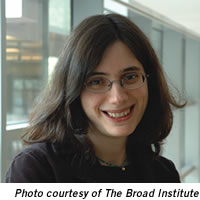
Computational biologist Aviv Regev joined the Broad Institute as a core faculty member in 2006. Her research centers on understanding how complex molecular networks function and evolve in the face of genetic and environmental changes. She studied for a direct M.Sc. at the Interdisciplinary Program for the Fostering of Excellence at Tel Aviv University, where she focused mostly on biology, computer science and mathematics, and did research in theoretical biology (on the evolution of development) and experimental biology (on genomic instability). In her Ph.D. research (with Eva Jablonka at Tel Aviv University and Ehud Shapiro at the Weizmann Institute) she developed a novel representation language for biomolecular processes based on a computer process algebra - a framework originally developed for studying concurrent computation systems.
In parallel, Aviv worked for several years in the biotech industry in Israel, where she established and directed a bioinformatics R&D team at QBI, a functional genomics company. In the past several years she has been a fellow at the Bauer Center for Genomics Research at Harvard University, where she worked on the reconstruction of regulatory networks and modules from genomics data.
Aviv was recently awarded the Burroughs Wellcome Fund Career Award at the Scientific Interface to support her research on the function and evolution of molecular networks. She also received the 2008 Overton Prize from the International Society for Computational Biology. In addition to her position at the Broad Institute, she is an assistant professor in the Department of Biology at MIT.
Presentation Title: Profiling the Breast Tumor Microenvironment
Keynote Introduction Provided by: Alfonso Valencia
Date: Tuesday, July 22
Time: 9:00 a.m.
Room: Hall G
Presentation Abstract:
It is increasingly evident that breast cancer outcome is strongly influenced by signals emanating from tumor-associated stroma. However, little is known regarding how gene expression changes in the stromal compartment affect epithelial tumor progression. We have employed laser capture microdissection to generate and compare gene expression profiles of tumor-associated stroma from 53 primary breast tumors and (matched) normal stroma, and derive transcriptional profiles strongly associated with clinical outcome. From this data we derive a novel stroma-derived prognostic predictor (SDPP) that permits stratification of disease outcome independently of standard clinical prognostic factors and previously published gene expression-based predictors. Our SDPP selects poor-outcome patients from multiple clinical subtypes, including lymph node-negative patients, and predicts patient outcome in multiple published expression datasets generated from whole tumor tissue. The SDPP has increased accuracy with respect to previously published predictors, and prognostic accuracy increases upon predictor integration. Genes represented in the SDPP reveal the strong prognostic capacity of differential immune responses as well as angiogenic and hypoxic responses.
Biography:
 Morag Park received her Ph.D. in Molecular Virology at the University of Glasgow, Scotland, in 1983. Upon joining Dr. George Vande Woude's
Laboratory at the National Cancer Institute at NIH (Washington) USA, she turned her attention as a post-doc to studies on oncogenes where she
cloned the Met receptor tyrosine kinase and its related oncogenic form, Tpr-Met. This led to an interest in the molecular mechanisms that lead
to oncogenic activation of receptor tyrosine kinases in human cancers. More recently her interests have focused on changes in the breast cancer
tumor microenvironment. This work was conducted primarily in the Molecular Oncology Group at the McGill University Health Centre. She became Professor
of Biochemistry and Oncology at McGill in 1996, she is a James McGill Professor, holds the Diane and Sal Guerrera Chair in Cancer Genetics at McGill
University and is a Fellow of the Royal Society of Canada. Dr.
Park is currently the Scientific Director of CIHR's Institute of Cancer Research and Director of the Molecular Oncology Group.
Morag Park received her Ph.D. in Molecular Virology at the University of Glasgow, Scotland, in 1983. Upon joining Dr. George Vande Woude's
Laboratory at the National Cancer Institute at NIH (Washington) USA, she turned her attention as a post-doc to studies on oncogenes where she
cloned the Met receptor tyrosine kinase and its related oncogenic form, Tpr-Met. This led to an interest in the molecular mechanisms that lead
to oncogenic activation of receptor tyrosine kinases in human cancers. More recently her interests have focused on changes in the breast cancer
tumor microenvironment. This work was conducted primarily in the Molecular Oncology Group at the McGill University Health Centre. She became Professor
of Biochemistry and Oncology at McGill in 1996, she is a James McGill Professor, holds the Diane and Sal Guerrera Chair in Cancer Genetics at McGill
University and is a Fellow of the Royal Society of Canada. Dr.
Park is currently the Scientific Director of CIHR's Institute of Cancer Research and Director of the Molecular Oncology Group. Homepage: http://www.mcgill.ca/biochemistry/department/faculty/park/
Presentation Title: Systems Biology: an era of reconstruction and interrogation
Keynote Introduction Provided by: Thomas Lengauer
Date: Tuesday, July 22
Time: 4:45 p.m.
Room: Hall G
Presentation Abstract:
The emerging systems biology paradigm (components -> networks -> computational models -> physiological states) involves two key steps; First, the reconstruction of a network from massive amounts of data, and, second, an assessment of its functional states. We will detail both steps from a bottom-up perspective. The reconstruction process fundamentally the assembly of biochemical, genetic and genomic (BiGG) data in a mathematically structured format: basically the formation of a BiGG knowledge base. The in silico analysis methods that have been developed to compute the functional states of the reconstructed network are fundamentally query tools to interrogate the contents of the BiGG knowledge base.
Biography:
 Professor Palsson earned a Ph.D. from the University of Wisconsin in 1984. He held a faculty position at the University of Michigan from 1984 to 1995. He has been with UCSD since 1995. He is the author of over 220 peer reviewed scientific articles. He co-authored the text TISSUE ENGINEERING, Prentice Hall in 2004, and SYSTEMS BIOLOGY, Cambridge University Press in 2006. He sits on the editorial boards of several bioengineering and biotechnology journals.
 Research Interest: Professor Palsson current research at UCSD focuses on 1) the reconstruction of genome-scale biochemical reaction networks, 2) the development of mathematical analysis procedures for genome-scale models, and 3) the experimental verification of genome-scale models with current emphasis on cellular metabolism and transcriptional regulation in E. coli and Yeast.
Awards: Professor Palsson received an Institute of International Education Fellowship in 1977, Rotary Fellowship in 1979, a NATO fellowship in 1984, was named the G.G. Brown Associate Professor at Michigan in 1989, a Fulbright Fellow in 1995, an Ib Henriksen Fellow in 1996, the Olaf Hougen Professorship at the University of Wisconsin in 1999, the Lindbergh Tissue Engineering award in 2001, was named the Galetti Chair of Bioengineering in 2004, was elected into the National Academy of Engineering in 2006, received the UCSD Chancellor's Associates award in Science and Technology in 2006, and was selected as the developer of one of the most influential technologies on Biotech over the past 10 years by Nature Biotechnology (March 2006).
Patenting: Professor Palsson is an inventor of over 25 U.S. patents, many of which are in the area of hematopoietic stem cell transplantation, cell culture technology, bioreactor design, gene transfer, cell separations, high-throughput single cell manipulation, network reconstruction, in silico model building and metabolic engineering.
Technology transfer: He co-founded a biotechnology company, AASTROM BIOSCIENCES (NASDAQ: ASTM) in 1988, where he served as the Vice President of Developmental Research for two years. Dr. Palsson is the founder and co-founder of ONCOSIS, a company that was focused on the purging of occult tumor cells in autologous bone marrow transplants, renamed as CYNTELLECT (www.cyntellect.com), focusing on instrumentation for high-throughput screening and in situ cell sorting and processing, and GENOMATICA (www.genomatica.com), a company that is focused on in silico biology (a spin-off from UCSD).
Homepage: http://systemsbiology.ucsd.edu/Researchers/Palsson
Department of Molecular Genetics and Biotechnology
Faculty of Medicine
The Hebrew University of Jerusalem
Israel
Presentation Title: Intriguing roles for small non-coding RNAs in the cellular regulatory networks
Keynote Introduction Provided by: Michal Linial
Date: Wednesday, July 23
Time: 9:00 a.m.
Room: Hall G
Presentation Abstract:
Small non-coding RNAs have gained recently much interest, as it has become evident that they are wide-spread in both pro- and eukaryotes and play important regulatory roles in many cellular processes. These molecules present intriguing computational challenges: How can small RNA-encoding genes be identified based on the genome sequence? How many such genes are present in a genome? How can their gene targets be identified? What are the properties of post-transcriptional regulation of gene expression by small RNAs in comparison to other types of regulation, such as transcriptional regulation and protein-protein interaction? How is post-transcriptional regulation by small RNAs integrated with transcriptional regulation in the cellular networks? In my talk I will touch upon these questions and describe our attempts to address them. Interestingly, pathogenic bacteria and viruses also encode regulatory RNAs, some of which were shown to play a role in the virulence of the pathogens carrying them. Furthermore, the presence of small non-coding RNAs in pathogens raises the intriguing possibility that upon infection of a host cell, they may be used to downregulate important host genes. I will describe our combined computational-experimental study that showed for the first time that a viral microRNA inhibits the activity of a gene of the human immune system, placing microRNAs as important players in the battle between viruses and humans.
Biography:
 Hanah Margalit is a Professor of Computational Molecular Biology at the Hebrew University of Jerusalem. She received her BSc in
Mathematics and Biology and her PhD in Computational Biology from the Hebrew University. Her PhD research concerned mathematical modeling
and simulation of molecular control mechanisms in bacteria. For her postdoc she went to NIH, where she specialized in bioinformatics.
When she returned to Israel in 1989 she was among the first to develop this field within the scientific community in Israel. She was the
first president of the Israeli Society of Bioinformatics and Computational Biology. The studies in her group have focused mainly on molecular
and cellular mechanisms, attempting to extract functional information from the data accumulated in biological databases. Her more recent
studies concern integration of various types of genomic, transcriptomic and proteomic data, in order to understand the intertwining of
different regulation levels in the cell. These include transcription regulation, post-transcriptional regulation by small non-coding RNAs,
and post-translational regulation by protein-protein interactions. Among the recent contributions of the group is the first systematic
discovery of novel small RNA-encoding genes in Escherichia coli, detection of mixed network motifs involving various levels of regulation,
and the discovery of a novel immuno-evasion mechanism mediated by a viral miRNA.
Hanah Margalit is a Professor of Computational Molecular Biology at the Hebrew University of Jerusalem. She received her BSc in
Mathematics and Biology and her PhD in Computational Biology from the Hebrew University. Her PhD research concerned mathematical modeling
and simulation of molecular control mechanisms in bacteria. For her postdoc she went to NIH, where she specialized in bioinformatics.
When she returned to Israel in 1989 she was among the first to develop this field within the scientific community in Israel. She was the
first president of the Israeli Society of Bioinformatics and Computational Biology. The studies in her group have focused mainly on molecular
and cellular mechanisms, attempting to extract functional information from the data accumulated in biological databases. Her more recent
studies concern integration of various types of genomic, transcriptomic and proteomic data, in order to understand the intertwining of
different regulation levels in the cell. These include transcription regulation, post-transcriptional regulation by small non-coding RNAs,
and post-translational regulation by protein-protein interactions. Among the recent contributions of the group is the first systematic
discovery of novel small RNA-encoding genes in Escherichia coli, detection of mixed network motifs involving various levels of regulation,
and the discovery of a novel immuno-evasion mechanism mediated by a viral miRNA.
Homepage: http://margalit.huji.ac.il/
ISCB Senior Scientist Accomplishment Award
Investigator, Howard Hughes Medical Institute
Professor, Biomolecular Engineering, University of California, Santa Cruz
Director, Center for Biomolecular Science & Engineering
Scientific Co-Director, California Institute for Quantitative Biosciences (QB3)
Presentation Title: 100 Million Years of Evolutionary History of the Human Genome
Date: Wednesday, July 23
Time: 2:00 p.m.
Room: Hall G
Presentation Abstract:
With our ability to sequence entire genomes, we have for the first time the opportunity to compare the genomes of present day species, and deduce the trajectories by which they diversified from a common ancestral genome. Starting with a small shrew-like ancestor in the Cretaceous period approximately 100 million years ago, the different species of placental mammals radiated outward, creating a stunning diversity of forms from whales to armadillos to humans. From the genomes of present-day species, it is possible to computationally reconstruct what most of the DNA bases in the genome of the common ancestor of placental mammals must have looked like. We can then deduce most of the changes that lead to humans and other mammalian species. In so doing, we discover how Darwinian evolution has shaped us at the molecular level.
Because most random mutations to functionally important regions of DNA reduce fitness, these changes usually disappear over time in a process known as negative selection. From its unusually high conservation between species, it is immediately evident that at least 5% of the human genome has been under negative selection during most of mammalian evolution, and is hence likely to be functionally important. Protein-coding genes and structural RNA genes stand out among the negatively selected regions because of their distinctive pattern of restricted DNA base substitutions, insertions and deletions. However, most of the DNA under negative selection in mammalian genomes, and indeed vertebrate genomes in general, does not appear to be part of protein-coding genes, and shares no sequence similarity with any DNA in the genomes of invertebrates. Experimental evidence suggests that many of these unclassified functional elements serve to regulate genes involved in embryonic development.
Overlaid on the background of negative selection, we occasionally see a short segment of widely conserved DNA that has rapidly changed in a particular lineage, suggesting possible positive selection for a modified function in that lineage. The most dramatic example of this in the last 5 million years of human evolution occurs in a previously unstudied RNA gene expressed in the developing cerebral cortex, known as Human Accelerated Region 1 (HAR1). This gene is turned on only in a select set of neurons, during the time in fetal development when these neurons orchestrate the formation of the substantially larger cortex of the human brain. It will be many years before the biology of such examples is fully understood, but right now we relish the opportunity to get a first peek at the molecular tinkering that transformed our animal ancestors into humans.
Biography:
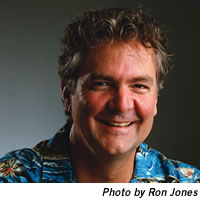
David Haussler's research lies at the interface of mathematics, computer science, and molecular biology. He develops new statistical and algorithmic methods to explore the molecular evolution of the human genome, integrating cross-species comparative and high-throughput genomics data to study gene structure, function, and regulation. In recent years, he has begun taking his computational hypotheses to the laboratory for further study in living systems.
Haussler is credited with pioneering the use of mathematical computer models-hidden Markov models (HMMs), stochastic context-free grammars, and discriminative kernel methods-for analyzing DNA, RNA, and protein sequences. These methods have specific applications in finding protein-coding and RNA genes in the human and other genomes and predicting three-dimensional protein folding based on similarities to other proteins with known structures.
Most recently, Haussler has focused on broadly exploring the functional elements of the human genome, primarily through interspecies comparisons. His findings have shed light on the possible functionality of what was once considered to be "junk" DNA, and his lab has identified and explored the function of genomic elements that have remained conserved for millions of years and then undergone rapid evolution in newer species. He has also begun to computationally reconstruct the genome of the ancestor common to placental mammals.
As a collaborator on the international Human Genome Project, his team posted the first publicly available computational assembly of the human genome sequence on the internet. This has evolved into the UCSC Genome Browser (http://genome.ucsc.edu), a web-based tool that is used extensively in biomedical research.
Haussler received his PhD in computer science from the University of Colorado at Boulder. He is a member of the National Academy of Sciences and the American Academy of Arts and Sciences and a fellow of AAAS and AAAI. He has won a number of awards, including the 2006 Dickson Prize for Science from Carnegie Mellon University and the 2003 ACM/ AAAI Allen Newell Award.
Homepage:
http://www.cbse.ucsc.edu/staff/haussler.shtml
Laboratory page:
http://www.cbse.ucsc.edu/staff/hausslerlab.shtml