
Leading Professional Society for Computational Biology and Bioinformatics
Connecting, Training, Empowering, Worldwide
Leading Professional Society for Computational Biology and Bioinformatics
Connecting, Training, Empowering, Worldwide

November 16 - 20, 2020
Melbourne, Australia

November 17-20, 2026
Seoul, South Korea
ISCB Collaborative Conference

November 25 - 27, 2026
Rome, Italy
ISCB Collaborative Conference

Jan 3 - 7, 2027
Big Island, Hawai'i

April 20 - 22, 2027
Glasgow, Scotland
ISCB Official Event

May 24 - 27, 2027
Grand Rapids, Michigan, USA

July 18 - 22, 2027
Copenhagen, Denmark

September 28 - October 1, 2027
Singapore
ISCB Collaborative Conference

Bioinformatics Community Events
ISCB's Annual Flagship Meeting

Support the society while achieving your marketing goals

Become an ISCB collaborativeconference, learn more here

Regional, topical, virtual, worldwide - your platform to present science

Dedicated to facilitating development for students and young researchers

The ISCB Affiliates program is designed to forge links between ISCB and regional groups

Topically-focused collaborative communities

Connect with ISCB worldwide

ISCB's environmental sustainability effort

ISCB is committed to creating a safe, inclusive, and equal environment for everyone

Resource library for education and training materials

Search jobs, find talent

Science at the click of the mouse, recorded talks and tutorials

Latest research and publications

Certifying Quality in Computational Biology Education

Guides to help you navigate the ISCB

Latest updates from ISCB

Highlighting Society events, programs, and achievements

Celebrating scientific achievement and innovation

Honoring our distinguished researchers

Recognizing contributions and achievements
Links within this page: Publication Fee | Key Dates | Topics | Submission Guidelines | Review Process | Conference Proceedings | Transfers to Bioinformatics Advances
ISMB/ECCB 2025 invites submissions of full papers (not abstracts) consisting of new, unpublished work, reporting theoretical, computational, and statistical advances in computational biology and its intersections with other fields.
Submissions are encouraged to report on advances in algorithm development and optimization, data structures, data visualization, artificial intelligence/machine learning, text mining, statistical inference, database and ontology development, image analysis, citizen and open science, etc. to analyze all types of biological data.
While we encourage submissions in new and emerging areas, we expect that the majority of submissions addressing topical biological domains will fall into one of the areas below. Please note during the EasyChair submission process you will: 1) select your "Area" (list below) and 2) select one or more of the Communities of Special Interest (COSIs) best suited for the presentation of your research from within the area. (learn more about COSIs here).
For a variety of reasons, ISCB strongly prefers that scientific research accepted for oral presentation be presented in-person at the conference venue. We understand that some presenters will have valid reasons to avoid in-person attendance. ISCB will grant remote presentation options for reasons associated with maternity/paternity leave, care for a family member, personal/medical disability, sickness, financial hardship, or potential visa problems. If your research is accepted for oral presentation and you are unable to present in person, ISCB requires notification at the time of acceptance and no later than May 14, 2025. If unable to participate you will need to request a waiver by writing
Any pre-approved virtual presenters will be required to provide a pre-recorded talk for the virtual platform library in advance of the conference as a precaution due to possible technical issues.
ISMB/ECCB 2025 follows the ISCB policy for acceptable use of large language models (https://www.iscb.org/iscb-policy-statements/iscb-policy-for-acceptable-use-of-large-language-models)
Authors of accepted Proceedings papers are responsible for the publication fee of $700 USD. This is a substantial reduction from the publication fees customary for OUP journals. ISCB is committed to supporting all of its members, especially those from under-developed nations and/or those without funding. If your manuscript is accepted and you are unable to pay for the publication fees in part or in full, you may submit a fee waiver request to
Publication fee payments are due by May 1, 2025. The online proceedings payment system will open April 9, 2025.
Proceedings publications are part of an online-only special issue of Bioinformatics and are open access (CC-BY), fully citable, and indexed by Medline and ISI. See the conference proceedings for ISMB 2024 for an example of online-only publication by Oxford University Press.
|
Bioinformatics Education and Citizen Science Chair(s): |
Systematic examination and analysis of learning models, outcomes, and educational programs. Serious gaming and game-ification. |
|
Bioinformatics of Microbes and Microbiomes Chair(s): |
Computational methods and algorithms for studying microbial organisms, viruses, and their communities from omics and marker data. |
|
Biomedical Informatics Chair(s): |
Computational approaches to clinical and medical problems, including disease predisposition, diagnostic, progression, and treatment. Pharmacogenomics. |
|
Equity and Diversity in Computational Biology Research Chair(s): |
Research that examines issues of equity, representation, diversity, or other elements related to datasets, methods, or the field at large; health policy; fairness in ML; biases in GWAS studies; bias in literature; biology/genomics of traditionally understudied groups. |
|
Evolutionary, Comparative and Population Genomics Chair(s): |
Phylogeny estimation, and modelling variation and change under the influence of evolutionary processes. Selection and adaptation. Multi-species analyses. |
|
Genome Sequence Analysis Chair(s): |
Assembly and mapping algorithms. Gene prediction and annotation. Detection, qualification, and annotation of genomic variants and their structural and functional effects. |
|
Macromolecular Sequence, Structure, and Function Chair(s): |
Analysis and annotation of DNA, RNA, and proteins to predict, characterize, and understand their structure, function, and evolution. Includes protein design and imaging techniques for macromolecules. |
|
Privacy and Security for Computational Biology Chair(s): |
Methods related to the protection of individualized molecular and medical information; privacy models; federated learning; GWAS on summary statistics; federated EHR data analysis; new approaches to federated data storage, access, and analysis. |
|
Regulatory and Functional Genomics Chair(s): |
Transcriptomics, single-cell RNA techniques, non-coding RNA, epigenetics, chromatin structure. |
|
Systems Biology and Networks Chair(s): |
Emergent properties and complex multi-component interactions within biological systems, considering genomic, proteomic, metabolomic, and other -omic data; gene regulation and circuit design. |
|
General Computational Biology Chair(s): |
Novel techniques in emerging areas of computational biology not covered by the other areas listed above, including intersections with other fields. You are encouraged to submit to one of the other thematic areas. If you feel your contribution is at the intersection of many fields, please pick one. If you still want to submit to this area, you will be asked to explain why. Please note that the submissions in this area and others are likely to be moved, subject to chairs’ considerations.< |
All submissions MUST select a presenting author. The presenting author MUST be marked as a corresponding author. Papers can be submitted in either a template-free format or by following the template for author submission to the OUP journal Bioinformatics. You are encouraged to submit in the OUP format.If the OUP template is used, the paper length must not exceed nine pages. If the template-free format is used the length of the paper must not exceed 12 pages (single space, 12 point font). In either format the page count should include any required author information (submissions are not double-blind), abstract, figures, tables, and bibliography. Note that alt text is required for any image used in the paper. Papers must be submitted as a PDF. If your submission is conditionally accepted, it then MUST be resubmitted as a Word or LaTeX file to adhere to the OUP proxy requirements. In either case, the paper must contain an abstract whose length does not exceed 250 words.
Authors of submissions will need to select 1st choice and 2nd choice areas most suitable for their paper (this is relevant for which Area Chairs/reviewers will review the paper). During submission, authors will be able to identify up to three COSIs most relevant to the topic of their submission (this is relevant for which COSI, i.e. conference track, the talk will be presented at if the paper is accepted). During the review process three reviews will be sought. Papers may be moved between areas as appropriate - this is often necessary for load balance and fit between areas during the review process.
If absolutely necessary, submissions can be accompanied by supplementary material, similar to submissions to scientific journals. The supplementary material should be collected in a separate file that is appropriately marked and uploaded as an attachment on the paper submission page in EasyChair. However, we advise against adding supplementary material, in general. Supplementary material will be published on the proceedings site alongside the online version of the conference paper. We do not support supplementary material presented at any other than the publisher's site. Additionally, OUP does not edit or typeset supplementary data - it is uploaded online exactly as it is received, so authors must ensure its accuracy before submitting.
Papers should be submitted in their final form since the evaluation procedure does not allow for additional rounds of refinement / modification in response to referee criticisms. Poor quality submissions or insufficiently prepared papers are very often rejected. Paper presenters must register and pay to attend and present at the conference.
ISMB does not accept previously published works through peer-reviewed publications. Please note that conference presentations, posting on recognized preprint servers (such as Arxiv, Biorxiv and PeerJ preprints), or posting on a personal or employer's website do not constitute prior publication. In case of doubt, please contact
After acceptance papers will have to be formatted according to the layout style required by the OUP Bioinformatics journal and will be limited to 9 pages. Formatting requirements can be found at:
https://academic.oup.com/pages/authoring/journals/preparing_your_manuscript?login=true
Templates are available on OUP’s site for direct download:
http://static.primary.prod.gcms.the-infra.com/static/site/journals/document/oup-authoring-template.zip?node=7987de40f2eea956bc39
Note: the zip file may not download on some browsers/extensions. If you encounter this issue, please attempt on an unrelated browser (ie not chrome and edge as both are built off the chromium kernel).
Papers not conforming to guidelines will not be reviewed
Papers submitted for review should represent original, previously unpublished work. At the time the paper is submitted to ISMB/ECCB 2025, and for the entire review period, the paper should not be under review by any other conference or scientific journal.
Papers will be accepted electronically via the submission system, as a PDF, until January 23, 2025, 11:59 PM in the time zone of your choice. *No extension will be granted*If your submission is conditionally accepted, it then MUST be resubmitted as a Word or LaTeX file to adhere to the OUP proxy requirements.
Submissions will be subject to two rounds of reviews, allowing the authors to reply to the reviewer comments. In the first round the submissions will be classified into three categories: (a) accept/minor changes, (b) major changes, and (c) not accepted. Papers in the first category will be considered “conditionally" accepted without a second round of full review; Area Chairs would review the final version and in some cases ask the reviewers if concerns, if any, have been addressed. Authors of submissions in the second category will be given the opportunity to submit revised drafts based on the reviewer comments, with letters of response to the reviewers outlining the main changes and/or giving counter arguments to the reviewer points.
We expect the majority of papers to fall in categories (a) and (c), with category (b) reserved for papers that the reviewers identified as strong but with substantial issues that need to be addressed. Among the resubmitted papers, the second round of review will select the most suitable papers for presentation. All reviews of submitted papers are considered confidential and details are not disclosed outside of the review process. These will be published in the Bioinformatics journal and presented at the conference. All accepted papers are expected to have source code available and linked in the manuscript to ensure reproducibility of results.
Publication of the proceedings as an online part of the journal Bioinformatics will result in fully citable articles, indexed by Medline and ISI. See the conference proceedings for ISMB 2024 for an example of online-only publication by Oxford University Press.
Accepted papers will be published as conference proceedings in an open access, online-only, section of a regular issue of the Bioinformatics journal with an electronic version distributed to conference delegates. The proceedings will be available online approximately one month prior to the conference opening.
ISMB/ECCB 2025 provides authors of accepted papers an oral presentation to provide an oral summary of their work. All presentations should be no longer than 20 minutes including 3-4 minutes for discussion. Paper presenters must register and pay to attend and present at the conference.
Getting your paper accepted to the ISMB Proceedings is very competitive. For papers which are ranked highly but are not accepted we will be making offers to transfer some manuscripts to the ISCB journal Bioinformatics Advances. Manuscripts and the associated ISMB reviews would only be transferred to the journal upon author agreement. By transferring the reviews rapid decisions can be made by the journal. Papers accepted to Bioinformatics Advances would NOT be a part of the ISMB/ECCB 2025 Proceedings and would NOT be offered a talk. Please also note that Bioinformatics Advances is fully open access and that the normal Open Access Charges for the journal would apply.
Authors may opt out of this transfer process at submission time.
Links within this page: Multiple Presentations | Key Dates | Tracks | Submission Guidelines | Review Process | Poster Details | Our Partnership with Showcare
We invite abstracts for research that is topical to bioinformatics and computational biology, which is in progress (unpublished, formerly Late-Breaking Research) or previously published within the last 18 months (previously Highlights Track) for consideration for oral and/or poster presentation.
Your abstract should be submitted to the Communities of Special Interest (COSI) or Open Session Track that most accurately reflects the area of the work. (You will have the option to identify two other tracks that may also be suited to your research area during your submission). You can learn more about COSIs here.
Talks and posters are organized according to scientific topics which are covered by the COSIs and open sessions listed and described below. Please note, abstracts are not limited to COSI and open session topics and if the topic of your submission falls outside the listed COSIs you can choose the "General Computational Biology" area. Your abstract should convey a scientific result and should not be an advertisement for any commercial software package.
The same talk is not permitted to be given more than once as an oral presentation at ISMB. Research may be presented as both a talk and a poster if and only if it is submitted as two individual submissions with TWO different presenters. Having the same person deliver two (or more) different talks is NOT PERMITTED on the same topic. This allows for many people from one lab to present the work of the lab. A presenting author may present NO MORE THAN ONE talk or poster on the same topic.
For a variety of reasons, ISCB strongly prefers that scientific research accepted for oral presentation be presented in-person at the conference venue. We understand that some presenters will have valid reasons to avoid in-person attendance. ISCB will grant remote presentation options for reasons associated with maternity/paternity leave, care for a family member, personal/medical disability, sickness, financial hardship, or potential visa problems. If your research is accepted for oral presentation and you are unable to present in person, ISCB requires notification at the time of acceptance and no later than May 15, 2024. If unable to participate in person you will need to request a waiver by writing
Any pre-approved virtual presenters will be required to provide a pre-recorded talk for the virtual platform library in advance of the conference as a precaution due to possible technical issues.
ISMB/ECCB 2025 follows the ISCB policy for acceptable use of large language models (https://www.iscb.org/iscb-policy-statements/iscb-policy-for-acceptable-use-of-large-language-models).
Any recent research, published or unpublished is eligible for submission. Different submission types have different deadlines and notification dates. Be sure to check the below table or key dates page to find the dates relevant to your submission.
Poster only submissions DO NOT require any materials to be uploaded during submission. Submissions are evaluated on the 250 word text abstract provided during submission.
3DSIG: Structural Bioinformatics and Computational Biophysics | BioInfo-Core | Bioinformatics in UK | BioVis: Biological Data Visualization | BOKR: Bio-Ontologies and Knowledge Representation | BOSC: Bioinformatics Open Source Conference | CAMDA: Critical Assessment of Massive Data Analysis | CompMS: Computational Mass SPectrometry | CSI: Computational and Systems Immunology | DREAM Challenges | Education | ELIXIR/NIH-ODSS | Equity and Diversity in Computational Biology Research | EvolCompGen: Evolution and Comparative Genomics | Function: Gene and Protein Function Annotation | GenCompBio: General Computational Biology | HitSeq: High-throughput Sequencing | Innovation at the Intersection: Industry's Role in BIoinformatics | iRNA: Integrative RNA Biology | MICROBIOME | MLCSB: Machine Learning in Computational and Systems Biology | NetBio: Network Biology | NIH Track on GenAI, Cyberinfratructure, Digital Twins, and Quantum Computation | Publications - Navigating Journal Submissions | RegSys: Regulatory and Systems Genomics | Stewardship Critical Infrastructure | SysMod: COmputational Modeling of Biological Systems | Text Mining: Text Mining for Healthcare and Biology | TransMed: Translational Medical Informatics | VarI: Variance Interpretation | WEB: Workshop on Education for Bioinformatics
|
3DSIG: Structural Bioinformatics and Computational Biophysics Abstract Area Chairs |
Structure-based function prediction; Docking, analysis, prediction and simulation of biomolecular interactions such as protein-protein, protein-ligand and protein-nucleic-acid; Protein dynamics and disorder; Evolution studied through structures; Application of structure to systems biology; Macromolecular assemblies; Structural genomics; 3D databases and data mining; Molecular visualization; Relevant methods of structure determination particularly hybrid methods; Prediction and analysis of protein domains; Membrane protein structure analysis and prediction; The structural basis of immunology. |
|
Abstract Area Chairs Learn more about Bioinfo-core here |
The major goal of this COSI is to offer a community to people who manage and staff bioinformatics cores around the world. Topics of interest to this group for our ISMB workshop include topics that core members would find interesting or useful. This includes but is not limited to: management topics relevant to cores, core formation and setup, workflow development, reproducibility, best practices, training, or exploring analysis of new types of data. |
|
Abstract Area Chairs Learn more about Bioinformatic in the UK here |
Recognising that the UK hosts the 2025 meeting, a one-day UK track will be dedicated to showcasing the UK’s research, innovation and talent, and includes a dedicated poster reception and networking event. The track will focus on Biodiversity and Agritechnology and Health, and encouraging contributions on methods (including AI), standards and applications. Abstracts for talks and posters in these areas are invited from Academic or Industry researchers in either Research career paths (faculty, fellows, postdocs, postgraduates), or Technical Professional paths (including but not limited to data stewards, data scientists and Research Software Engineers). Submissions are also encouraged from researchers and RTPs involved with data management and the data infrastructure, and bioinformaticians involved in interpreting the data and making an impact on health and biodiversity. The track will also feature invited keynotes and an industry panel. An evening poster reception will provide an opportunity for socialising and networking. The track is open to all conference delegates. All speakers, poster presenters and panel members will be drawn from UK institutions. The sessions will be coordinated by a Programme Committee, who will consider scientific and technical excellence as the primary consideration but will also seek to select papers that represent the breadth and diversity of the bioinformatics community in the UK, considering geography, scientific domain, career stage, and EDI principles. Only those based in the UK can apply for a poster and/or talk. |
|
BioVis: Biological Data Visualization Abstract Area Chairs Learn more about the BioVis COSI here |
The rapid adoption of data-intensive biology approaches creates enormous challenges for computational visualization techniques, which are needed to enable researchers to gain insight from their large and highly complex data sets. The goal of this session is to bring together researchers from the visualization, bioinformatics, and biology communities with the purpose of educating, inspiring, and engaging bioinformatics and biology researchers in state-of-the-art visualization research, as well as visualization researchers in problems in biological data visualization. Keywords: Visualisation, Visual Analytics, Education |
|
BOKR: Bio-Ontologies and Knowledge Representation Abstract Area Chairs Learn more about the Bio-Ontologies here |
|
|
BOSC: Bioinformatics Open Source Conference Abstract Area Chairs Learn more about BOSC here |
Launched in 2000 and held yearly since then, BOSC is organized by the Open Bioinformatics Foundation (OBF), a non-profit group dedicated to promoting the practice and philosophy of open source software development and open science within the biological research community. |
|
CAMDA: Critical Assessment of Massive Data Analysis Abstract Area Chairs Learn more about the CAMDA COSI here. |
The CAMDA track highlights and compares the latest methods and results in an international data analysis contest, with this year's topics including: (1) The Synthetic Clinical Health Records Challenge provides a rich set of highly realistic Electronic Health Records (EHR) tracing the diagnosis trajectories of diabetic patients, created with dual-adversarial auto-encoders trained on data from 1.2 million real patients in the Population Health Database of the Andalusian Ministry of Health. Predict relevant diabetes endpoints like blindness or cardiopathy from past diagnosis trajectories! (2) The Anti-Microbial Resistance Prediction Challenge features clinical isolates sequences. Predict resistance genes/markers and identify resistant bacteria! (3) The Gut Microbiome based Health Index Challenge features hundreds of WMS based taxonomic and functional profiles of healthy and unhealthy individuals. Take advantage of the Theater of Activity concept and compete already existing taxonomy based metrics! NOTE: CAMDA submitters should include a 3-5 page long abstract PDF |
|
CompMS: Computational Mass Spectrometry Abstract Area Chairs Learn more about the CompMS COSI here. |
|
|
Computational and Systems Immunology Abstract Area Chair |
Data-driven computational studies addressing fundamental or translational questions in immunology are also of interest. Potential topics may cover, but are not limited to:
We encourage researchers to submit abstracts showcasing innovative approaches and insights in these areas for consideration in our Special Session on Computational Immunology. |
|
Abstract Area Chairs Learn more about the DREAM Challenges here. |
The DREAM Challenges are crowd-sourcing to solve complex biomedical research questions. Together, we share a vision to enable individuals and groups to collaborate openly so that the 'wisdom of the crowd' provides the greatest impact on science and human health. Over sixty crowd-sourced DREAM Challenges have benchmarked informatic algorithms in biomedicine. DREAM has had over 30,000 cross-disciplinary participants from around the world that have volunteered as solvers. Over 105 academic journal publications have resulted from DREAM Challenges covering a range of disease areas. Learn more about the DREAM process - Pose > Prepare > Engage > Evaluate > Share
|
|
Education: Computational Biology Education Abstract Area Chair Learn more about the Education COSI here. |
A major goal of this COSI is to foster a mutually supportive, collaborative community in which bioscientists can share bioinformatics education and training resources and experiences, and facilitate the development of education programs, courses, curricula, etc., and teaching tools and methods. Keywords: education, training, training resources, curricula, competencies |
|
Abstract Area Chairs |
This is a closed track, it is not accepting abstract submissions. Biodata resources are essential to life science research, providing the infrastructure that supports data sharing, analysis, and discovery. However, maintaining reliable, long-lived services while adapting to rapidly changing scientific and technological landscapes presents an ongoing challenge. This session will bring together leading experts to examine how biodata resources are evolving to meet these demands. Through a series of insightful talks and discussions, we will explore how resource managers are driving innovation, ensuring sustainability, and addressing emerging needs in the global scientific community. Structuring Meaning: Ontologies and Knowledge Graphs in the Biodata Ecosystem Under the Hood: Building Scalable and Sustainable Biodata Infrastructure Demonstrating Value: Funding Models, Impact, and Engagement in Biodata Resources |
|
Equity and Diversity in Computational Biology Research Abstract Area Chairs |
This area is for research that examines issues of equity, representation, diversity, or other elements related to datasets, methods, or the field of computational biology at large. |
|
EvolCompGen: Evolution and Comparative Genomics Abstract Area Chairs Learn more about the EvolCompGen COSI here |
At the same time, evolutionary and comparative genomics are inherently “transversal” disciplines in that work in many other biological areas of research have some evolutionary component (e.g. cancer genomics, epidemiology, toxicology, population genetics, functional genomics, structural biology just to name a few). The scope of this COSI is intentionally kept broad. The track will feature a mix of proceedings, highlight, and invited talks. Priority will be given to contributions which are relevant to more than a single area of application, or to contributions which are not covered by more specialised COSIs. Keywords: Evolution, phylogeny, phylogenomics, comparative genomics, genome rearrangements, orthology, paralogy, recombination, lateral gene transfer, genome variation, population genomics, comparative epigenomics, epidemiology, cancer evolution genomics, genome annotation |
|
Function: Gene and Protein Function Annotation Abstract Area Chairs Learn more about the Function COSI here |
The Function COSI features the Critical Assessment of Function Annotation, an ongoing community challenge aimed at improving methods for protein function prediction. The Function-COSI holds annual meetings alongside ISMB. Also, we are conducting the multi-year Critical Assessment of protein Function Annotation, or CAFA, experiment. Keywords: Protein function prediction, machine learning, performance assessment |
|
Abstract Area Chairs |
Novel techniques in emerging areas of computational biology, including intersections with other fields. If all other areas are insufficiently descriptive of your work, please submit to the area below. NOTE that the submissions in this area can be moved, subject to chairs’ considerations. |
|
HitSeq: High-throughput Sequencing Abstract Area Chairs Learn more about the HiTSeq COSI here |
We seek contributions on any topic involving HTS data analysis including: genome assembly and haplotype phasing; transcriptome analysis; genetics and epigenetics variation; metagenomics and microbiome analysis; and new HTS platform data analysis (e.g. synthetic reads, long reads, nanopore). In addition to general sessions, we propose to have two specialized sessions to focus on current hot topics: a) long sequencing and mapping techniques, b) single cell sequencing applications, c) non-linear genome representations. Both of these topics have generated an enormous amount of interest recently. Keywords: sequencing, next generation, high throughput, algorithms, assembly, phasing, variation discovery, genotyping, metagenomics, microbiome, long reads, short reads, nanopre, pan-genomes, graph genomes |
|
Innovation at the Intersection: Industry's Role in Bioinformatics Abstract Area Chairs |
This is a closed track, it is not accepting abstract submissions. |
|
Abstract Area Chairs Learn more about the iRNA COSI here |
The goal of the Integrative RNA Biology session is to bring together experts in computational and experimental aspects of research in RNA Biology to cover new developments across this broad field of research. The meeting focuses on two major areas: (1) the development of computational and high-throughput experimental methods, and (2) the application of such methods to break new grounds in the study of RNA biology and disease. We aim to educate and inspire researchers in the field, novice and seasoned alike, by meshing together different aspects of Computational RNA Biology, and promoting cross-disciplinary collaborative research. Keywords: Transcriptomics, RNA processing, post-transcriptional regulation, non-coding RNA, RNA 2D/3D structure, alternative-splicing, alternative polyadenylation, RNA translation degragation and localization, genetic variants effect on RNA processing, RNA and disease. |
|
Abstract Area Chair Learn more about the MICROBIOME COSI here |
It therefore guides users in the selection and application of methods and in their proper interpretation. Furthermore, the COSI provides a platform for exchange and networking between method developers, and provides valuable information allowing them to identify promising directions for their future work. Keywords: microbiome, computational metaomics, microbial networks, pathogens, symbionts, (meta)omics-based diagnostics, microbial ecology and evolution The MICROBIOME Community of Special Interest aims at the advancement and evaluation of computational methods in microbiome research, especially metaomic approaches. Keywords: microbiome, genome reconstruction, metagenomics, metatranscriptomics, metaproteomics, microbial networks, microbial traits, symbionts, pathogens, genome-based diagnostics |
|
MLCSB: Machine Learning in Computational and Systems Biology Abstract Area Chairs Learn more about the MLCSB COSI here |
Molecular biology and all the biomedical sciences are undergoing a true revolution as a result of the emergence and growing impact of a series of new disciplines and tools sharing the -omics suffix in their name. These include in particular genomics, transcriptomics, proteomics and metabolomics, devoted respectively to the examination of the entire systems of genes, transcripts, proteins and metabolites present in a given cell or tissue type. Taking advantage of this wealth of genomic information has become a conditio sine qua non for whoever has the ambition to remain competitive in molecular biology and in the biomedical sciences in general. Machine learning naturally appears as one of the main drivers of progress in this context, where most of the targets of interest deal with complex structured objects: sequences, 2D and 3D structures or interaction networks. At the same time, bioinformatics and systems biology have already induced significant new developments of general interest in machine learning, for example in the context of learning with structured data, graph inference, semi-supervised learning, system identification, and novel combinations of optimization and learning algorithms. Keywords: Machine Learning, Data Mining, Deep Learning, Artificial Intelligence in Bioinformatics and Computational Biology |
|
Abstract Area Chair Learn more about the NetBio COSI here |
Keywords: networks, pathways, systems, network analysis, disease networks, disease pathways |
|
NIH Track on GenAI, Cyberinfrastructure, Digital Twins, and Quantum Computing Abstract Area Chairs |
This is a closed track, it is not accepting abstract submissions. This full-day track will explore the transformative potential of cloud and emerging technologies in biomedical research, focusing on quantum computing, digital twins, artificial intelligence (AI), and NIH cloud cyberinfrastructure initiatives. Hosted by the National Institutes of Health (NIH) Office of Data Science Strategy (ODSS) and Center for Information Technology (CIT), the session aims to bridge cutting-edge research and practical applications in areas like drug discovery, precision medicine, and personalized healthcare. It will bring together researchers, practitioners, and technology leaders to discuss the latest advancements and how they can revolutionize biomedical research and clinical applications. |
|
Publications - Navigating Journal Submissions Abstract Area Chairs |
This is a closed track, it is not accepting abstract submissions. |
|
RegSys: Regulatory and Systems Genomics Abstract Area Chairs Learn more about the RegSys COSI here |
An important goal of the meeting is to foster a collaborative community wherein scientists convene to solve difficult research problems in all areas of computational regulatory genomics. Keywords: |
|
Stewardship Critical Infrastructure Abstract Area Chairs |
This is a closed track, it is not accepting abstract submissions. |
|
SysMod: Computational Modeling of Biological Systems Abstract Area Chairs Learn more about the SysMod COSI here |
The meeting is open to the full range of methods used in systems modeling, including qualitative and quantitative modeling, dynamical and steady-state modeling, as well all applications of systems modeling including basic science, bioengineering, and medicine. Keywords: computational modeling, constraint-based models, logical models, kinetic models, multi-scale models |
|
Text Mining: Text Mining for Healthcare and Biology Abstract Area Chairs Learn more about the Text Mining COSI here |
|
|
TransMed: Translational Medical Informatics Abstract Area Chairs Learn more about the TransMed COSI here. |
This opens the debate on current state-of-the-art data infrastructures for translational medicine data integration and analysis. A variety of computational approaches are currently being used to harmonize and relate molecular data to clinical outcomes in order to better understand disease conditions. These methods also have the potential to discover biomarkers for early detection of disease, and targets for drug discovery, and to be used predictively to help to suggest personalised therapeutic strategies for patients. In this session we will bring scientists from both academia and industry to exchange knowledge and foster networking, to help in building up of the translational medicine community. Keywords: Translational medicine; clinical and ‘omics data integration; curation and harmonization; stratification of patients; informatics for integrating biology and the bedside; medical informatics; ontology-driven data representation; patient centered outcomes research; cohort data; deep learning |
|
Abstract Area Chairs Learn more about the VarI COSI here |
The meeting aims to organize a research network (VarI-COSI) facilitating the exchange of ideas and the establishment of new collaborations between researchers with different expertise. The VarI-COSI meeting is broadly divided in two sessions (“Genetic variants as markers: evolution, populations, GWAS” and “Genetic variants as effectors: function, structure, and regulation”) that encompass the four major research topics of the field: 1) Databases, data mining algorithms and visualization tools for variants analysis. 2) Methods for predicting regulatory/structural/functional impacts of SNVs. 3) Personal Genomics, GWAS studies and SNV prioritization. 4) Population genomics and phylogenetic analysis. |
|
WEB: Workshop on Education for Bioinformatics> Abstract Area Chairs |
This is a closed track, it is not accepting abstract submissions. |
All submission MUST select a presenting author. The presenting author MUST be marked as a corresponding author. Presenters of accepted abstracts are required to make the presentation themselves, and must register and pay to attend the conference. Submitters may choose to have their submission reviewed for: talk or poster or poster only. If you select talk or poster and are unsuccessful for a talk your abstract will automatically be considered for a poster presentation. Submission deadlines are posted in the deadlines section or key dates page.
During the submission process you will submit to the COSI or open session track that most reflects your research area. You will have the option to identify two other tracks that may also be suited to your research area during your submission.
All submissions will be evaluated by a program committee. Submitters may choose to have their submission reviewed for talk or poster or poster only. If you select talk or poster and are unsuccessful for a talk your abstract will automatically be considered for a poster.
Posters advertising commercial software will be rejected from this poster session and/or removed from the conference without notice. There is a separate space for such posters in the exhibition area. If you have an industry poster, contact
Scientific Research Exchange - Posters Presentation Hours
10:00 AM - 11:00 AM & 4:00 PM - 5:00 PM July 21-24, 2025
Poster schedule can be found on the poster page once available.
Recommended poster size is A0 size (84.1cm wide and 118.9cm tall).
Click to enlarge
*No onsite poster printing is available*
After the initial submission deadline, late-breaking posters can be submitted. The submission window is notably smaller, be sure not to miss deadlines posted in the deadlines section or key dates page, as extensions cannot be granted.
Not-for-profit research institutes and universities are able to submit their research findings as part of the call for posters. This will be displayed within the topic area of Institutional Research.
Individuals may choose to submit a poster presenting a review of a specific field or technique. These submissions do not need to contain original work from the author and are intended to be an introduction for individuals not familiar with the field or technique. These review are not meant to be advertisements (e.g. it is not acceptable that the poster is an advertisement for a book or other type of commercial publication).
Showcare is a trusted partner of ISCB. ISCB has authorized Showcare to build external pages in hopes to streamline your experience and enhance every step of your journey with ISCB.

Links within this page: Venue Information | Book your Official Accommodations | Conference Accommodations | Housing Policies | Travel
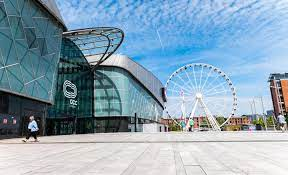 Conference will take place in the
ACC Liverpool
The address is:
King's Dock, Port of Liverpool, Kings Dock St
Liverpool L3 4FP, UK
https://www.accliverpool.com
BNetwork is the official Housing Bureau for ISCB's ISMB/ECCB 2025 Conference. A link to book your hotel room online will be provided when you complete your conference registration. It is recommended that you book your hotel room early in order to take advantage of the special room rates that are subject to availability. ISMB/ECCB 2025's success depends on attendees, sponsors, and exhibitors booking the conference hotels through the official Housing Bureau.
Please do not contact the hotels or make a reservation directly with the hotels. Discounted rates are only available through bnetwork, the official Housing Bureau. Contact bnetwork at
Please register for the conference before booking your accommodations.
Deadline for Discounted Rate: Tuesday, June 10, 2025
Pullman Liverpool Hotel offers accommodation overlooking the waterfront in Kings Dock, Liverpool. Guests can enjoy the on-site restaurant and bar, and free Wi-Fi is available throughout the hotel. Each of the 216 modern rooms come with a flat-screen TV, tea/coffee making facilities, free Wi-Fi and a mini fridge. You will find a 24-hour front desk at the property, and an on-site fitness suite. The Beatles Story is an 8-minute walk from Pullman Liverpool Hotel, as is the Tate Liverpool.
Distance to ACC Liverpool: I min walking
Rate: £149 single & £168.50 double
Offering the comfort, privacy and freedom of your own home, these fully-equipped suites are ideally located next to Liverpool’s famous Albert Dock and opposite the Echo Arena. Situated within the centre of Liverpool, Staybridge Suites provide an ideal base from which to explore all that the city has to offer. Directly opposite you will find the ACC Liverpool, whilst a short walk away is Liverpool One shopping centre, Tate Liverpool, the Maritime Museum and the Beatles Story.
Distance to ACC Liverpool: 1 min walking
Rate: £170 single/double
Leonardo Hotel Liverpool - formerly Jurys Inn is a 5-minute walk from the city centre. The property also offers free Wi-Fi access. There are work space areas available, as well as tea and coffee making facilities. A buffet breakfast is available daily. The hotel has a 24-hour reception and also provides services such as dry cleaning and laundry. A paid public parking is available.
Distance to ACC Liverpool: 1 min walking
Rate: £129 single & £139 double
Opposite M&S Bank Arena, Holiday Inn Express Liverpool-Albert Dock has a 24-hour front desk and stylish bar. The hotel is set in a 19th-century warehouse, a 5-minute walk from Liverpool centre. Some rooms have exposed brickwork or views of the Albert Dock, and all feature a private modern bathroom. There is two meeting rooms and business facilities on site. Just a 2-minute walk from The Beatles Story Museum, Holiday Inn Express Liverpool is 500 metres from Tate Liverpool. The Liverpool ONE Shopping Centre is just a 10-minute walk away.
Distance to ACC Liverpool: 5 min walking
Rate: £125 single/double
This hotel is in Liverpool city centre, opposite the Albert Dock and 300 metres from the Liverpool One shopping centre. Breakfast at the hotel is a hot and cold table service menu, including full-English and continental options. The hotel also has a 24-hour reception. The Tate Liverpool and the Beatles Story museums are both just 300 metres away. Surrounding the dock there is a fantastic selection of pubs and shops, whilst Liverpool Lime Street Station is a 10-minute walk away.
Distance to ACC Liverpool: 10 min walking
Rate: £90 single & £100 double
In the heart of the Liverpool One development in the city centre, this 4-star hotel has views over Albert Dock. Hilton Liverpool City Centre’s large bedrooms feature a minibar, a flat-screen TV, a seating area and views of Chavasse Park or the Mersey River. Liverpool Echo Arena and ACC Liverpool is a 5-minute walk away. Liverpool Lime Street Station is an 8-minute drive away, while Liverpool John Lennon Airport is 9.7 miles from Hilton Liverpool City Centre.
Distance to ACC Liverpool: 11 min walking
Rate: £210 single/double
Less than 1 km from Philharmonic Hall and a 6-minute walk from Liverpool Central Station, the property provides a restaurant and a bar. The property is non-smoking and is set 1 km from Albert Dock. Holiday Inn Express Liverpool - Central, an IHG Hotel can conveniently provide information at the reception to help guests to get around the area. Popular points of interest near the accommodation include Liverpool Metropolitan Cathedral, ACC Liverpool and Lime Street Train Station.
Distance to ACC Liverpool: 17 min walking
Rate: £97 single/double
The Halyard Liverpool, Vignette Collection, an IHG Hotel is situated in the centre of Liverpool, less than 1 km from Philharmonic Hall. Some rooms at the property have a terrace with a city view.. The daily breakfast offers continental, Full English/Irish or vegetarian options. Popular points of interest near the accommodation include Liverpool Central Station, Albert Dock and Liverpool Metropolitan Cathedral.
Distance to ACC Liverpool: 17 min walking
Rate: £135 single & £149 double
Situated in the historic city of Liverpool the Novotel Liverpool city center is a stylish 4-star hotel located in the heart of the city placing you next to some of the UK's best sporting, musical, and commercial attractions. Just a stones throw away you can experience art and history at the Albert Docks, or why not visit the cities' nightlife scene down at Cavern walks or why not try one of many award winning restaurants.
Distance to ACC Liverpool: 14 min walking
Rate: £114 single & £125 double
Set in Liverpool, Staycity Aparthotels Liverpool Waterfront has well-equipped accommodation featuring free WiFi, 100 yards from Pier Head and 650 yards from Albert Dock. Liverpool ONE is an 8-minute walk from Staycity Aparthotels Corn Exchange, while Royal Court Theatre is a 9-minute walk from the property.
Distance to ACC Liverpool: 16 min walking
Rate: £120 single & £130
The Mercure Liverpool Atlantic Tower Hotel overlooks the dock front, with views of the River Mersey. The modern accommodation is just 10 minutes’ walk from Albert Dock and Liverpool One shopping complex. Some rooms have views of the Mersey. Guests can enjoy light meals and drinks on the bar’s terrace. The bustling city centre and Liverpool Lime Street Rail Station are just 1 mile from the Mercure Liverpool Atlantic Tower Hotel.
Distance to ACC Liverpool: 20 min walking
Rate: £125 single/double
Please be informed that hotel bookings through bnetwork online portal are exclusively for participants registered to ISMB 2025
Prepayment for the full stay is required before receiving your confirmation.
Important: You are authorizing bnetwork to charge the provided credit card as per the following cancellation policy.
Liverpool has introduced a City Visitor Charge of £2.40 (VAT included), which is intended to support the city's visitor economy by funding initiatives that enhance the visitor experience and attract larger events. This will be affective from the 1st of June 2025 and will be per room, per night, with the hotel charging directly the guest upon check out.
From confirmation until 15th of April 2024, in case of cancellation of reservation or reduction of stay, no charges will apply.
From 16th of April 2025 up until 16th of May 2025, in case of cancellation or reduction of stay, a 60% charge of the total stay will apply as an administrative cancellation fees.
From 17th of May 2025 up until 16th of June 2025, in case of cancellation or reduction of stay, a 80% charge of the total stay will apply as an administrative cancellation fees.
After 17th of June 2025, in case of cancellation or reduction of stay, a 100% charge of the total stay will apply as an administrative cancellation fees.
Cancellations shall be communicated to bnetwork in writing via email at the following address:
For group bookings (6 rooms+/night): Please email
Upon confirmation, a deposit corresponding to 40% of the total cost of your reservation is requested to secure your hotel reservation.
By 16th of April 2025, an additional 40% deposit is requested, for a total amounting to 80% of the total reserved allotment.
By 16th of June 2025, an additional 20% deposit is requested, for a total amounting to 100% of the total reserved allotment.
From 17th of June 2025, any additional balance or booking is requested to be paid upon confirmation.
We kindly inform you that the final invoice will be issued and provided by the hotel through bnetwork.
From confirmation until 15th of April 2025, 100% of the initial reserved rooms can be cancelled without penalty.
From 16th of April 2025 to 16th of May 2025, 30% per night, hotel and room category of the current allotment can be cancelled without penalty.
From 17th of May 2025 to 16th of June 2025, 20% per night, hotel and room category of the current allotment can be cancelled without penalty.
From 17th of June 2025 to 7th of July 2025, 5% per night, hotel and room category of the current allotment can be cancelled without penalty.
From 8th of July 2025, 100% of the allotment night by night is due in case of cancellation.
There are a number of options for travel to Liverpool. You can find basic information about traveling to Liverpool here. You might also want to have a look at the Merseytravel site to help you plan your travel within or around Liverpool, especially if you’re traveling by bus, train, or car.
Delta Air Lines is pleased to offer special discounts for ISCB
Please click here to book your flights.
You may also call Conferences and Events® at 1(800)328-1111* Monday–Friday, 8:00 a.m. – 6:30 p.m. (EST) and refer to Meeting Event Code: NM3UP
*Please note there is not a service fee for reservations booked and ticketed via our reservation 800 number.
When booking a flight to Manchester or Heathrow with United, be sure to use the following discount code ZQ6Q218926
The International Society for Computational Biology (ISCB) is excited to announce that we are partnering with WebsEdge, an award-winning international film and broadcasting company, to bring ISCB Spotlight TV to ISMB/ECCB 2025.
ISCB Spotlight TV brings a thrilling element to the conference, with a daily TV show that will enhance your experience throughout this world-leading event. It will serve as a unique platform to help highlight the most important issues and hottest topics in bioinformatics and computational biology.
ISCB Spotlight TV will produce daily episodes throughout the conference featuring:
You will be able to view ISCB Spotlight TV here on the conference website, on YouTube, onsite at the conference, as well as across social media channels.
In the lead up to ISMB/ECCB 2025, WebsEdge will be reaching out to organizations to discuss the opportunity of producing a film about their work, to be included in the ISCB Spotlight TV show. There is a cost to be featured on these pre-recorded slots and only a limited number of organizations will be able to take part this year.
If you are interested in learning more about the in-depth reports, please contact Huw Harries at
Links within this page: Invitation Letters | Electronic Travel Authorizations | European Travel Information and Authorization System (ETIAS) Requirement
In order to travel to England, there are certain entry requirements you must meet depending on the country you live in.
You can check if you need a visa and if you meet basic eligibility requirements HERE.
If you require a visa, you can apply for a visa up to 3 months before the day you are due to travel to the UK. Once you’ve applied online, proved your identity and provided your documents, you’ll usually get a decision on your visa within 3 weeks if you’re outside the UK, or 8 weeks if you’re inside the UK. If deemed eligible, you may also pay an additional fee for a faster decision using ‘priority service’.
Please refer to the UK Visas and Immigrations Department webpages for additional links and information.
You can also visit the IATA TravelCentre website, input information about your trip, and receive details about what immigration and health requirements must be met.
If you require an invitation letter to support your visa application, please complete our Visa Letter Form. This must be completed after you register for the conference, and we recommend filling it out no later than Sunday, April 27th, 2025.
Using this form results in an auto-generated visa letter. If you experience any issues generating your visa letter, please reach out to
Non-Europeans can apply in advance for an ETA, and will need one to enter the UK beginning January 8, 2025. An ETA is not a visa; it is a digital permission to travel to the UK. Applying for an ETA costs £16.
For more details on the ETA application steps, what you can/cannot do with an ETA, and materials needed to apply, please read this page.
If you are unsure whether you need an ETA, you can check the "Who does not need an ETA" section on the page linked above.
The ETIAS travel authorization is a new program that was set to launch in 2025, but is now launching in the last quarter of 2026. No action from travelers is required at this time.
If you would like to review the ETIAS requirements in advance of the program's launch, please visit the links below.
It is a requirement for entry for visa-exempt nationals traveling to any of a list of 30 European countries. The travel authorization is linked to your passport, and with it you’re able to enter the territory of the listed European countries as often as you want for short-term stays in any 180-day period. Note, however, that the ETIAS authorization does not guarantee entry to these countries. You will still be required to show your passport and other documentation in order to verify that you meet each country’s entry requirements.
For detailed information about the ETIAS travel authorization, click HERE.
Each day of the conference is a chance to take small but meaningful steps toward a more sustainable future. Join the daily challenges, share your actions, and inspire your fellow attendees to make a difference one eco-friendly choice at a time.
Kick off the week by signing the ISCB Green Pledge and commit to sustainable practices! Your pledge is a powerful step toward a greener scientific community. Let’s come together and make it count!
Go meatless for the day and enjoy plant-based meals! Share your favorite veggie dish or recipe on Nucleus using #greeniscb.
Wear your oldest ISMB shirt and pack light! Post a photo of your retro look or minimalist luggage on the Nucleus Newsfeed using #greeniscb.
Ditch single-use items! Share a photo of your reusable tote bag, water bottle, or coffee mug on the Nucleus Newsfeed using #greeniscb. Or, show it off at the ISCB booth to grab a sticker!
Take action by donating to the ISCB Groves to plant trees and offset CO2 emissions. Together, we can "get back" to a healthier planet and embrace sustainable living. Share your pledge or donation on the Nucleus Newsfeed using #greeniscb and inspire others to join the movement!
Last updated June 18, 2025
The conference co-chairs are:
João Carlos Setubal
Professor of Bioinformatics and Department Head
Department of Biochemistry, Institute of Chemistry
University of São Paulo, Brazil
Carole Goble
Department of Computer Science
The University of Manchester, UK
Joint Head of Node ELIXIR-UK
Scientific co-Director Federated Analytics HDR-UK
Honorary Chair:
Dame Janet M. ThorntonSenior Scientist
Director emeritus, EBI/EMBL
Additional details are available here.
You can learn more about ISMB/ECCB at https://www.iscb.org/ismbeccb2025/home
The conference will be held at the ACC Liverpool, located at:
King's Dock, Port of Liverpool, Kings Dock St
Liverpool L3 4FP
ACC Liverpool is on the Liverpool Waterfront and is easy to reach, no matter how you’re arriving to the city. You can find instructions on reaching the venue here, whether you’re arriving in Liverpool by air, train, bus, car, bike, or foot.
The ACC also has an accessibility guide found here: https://www.accliverpool.com/media/sspbgf0t/acc-liverpool-accessibility-guide.pdf
Coming soon.
You should contact the hotel at which you’ve booked your accommodation directly to confirm. In most cases hotels will accept packages but may charge a handling or service fee.
If you need to store your luggage before you’re able to check into your hotel, or after the conference and prior to leaving Liverpool, you can ask the front desk staff at your hotel if they are able to store your luggage for you.
You may also want to check Bounce luggage storage as an alternate option for storing your luggage while in Liverpool, depending on your needs and location.
Yes, luggage storage will be available adjacent to the registration area from 8am to 5pm on Thursday, July 24th.
ISCB conferences are professional events. Children of registered ISCB conference attendees are welcome to attend the conference with their parent or guardian, as long as younger children are under the supervision of a parent or guardian at all times. Parents or guardians may bring children to educational events provided the child does not disrupt the event.
ISCB allows guests (defined as a non-scientist family member or non-scientist friend) of registered attendees. If you are a registered delegate who would like a non-scientist family member or friend to see your invited talk or poster presentation, please visit the registration desk to obtain a guest badge.
If you would like to bring your guest to a meal function at the conference, you can purchase a ticket for their entry at the registration desk.
Please note: All guest badges must be requested on site at the registration desk and are required for visiting at the conference.
Alcohol: Beer, wine, non-alcoholic beer, and soft drinks may be offered during the meeting. Alcoholic beverages will be distributed per the laws and regulations of the country where the event is being held and is only allowed in designated areas.
Smoking and use of tobacco: ISCB conferences are tobacco and vaping-free events. Smoking and use of tobacco is permitted only in designated areas outside of the venue. Tobacco products, including electronic cigarettes, are not permitted in the conference or at conference events.
Liverpool is in northwestern England in the United Kingdom. It is the fifth largest city in the UK and the largest settlement in the county of Merseyside. The city is located on the eastern side of the Mersey Estuary and adjacent to the Irish Sea.
In 2015, Liverpool was granted the status of a UNESCO City of Music—the only city in England with this designation. More recently, Liverpool was deemed England’s most walkable city!
Depending on where you live, you will need to meet certain entry requirements to visit England.
An overview of whether a visa will be required to travel to England can be found here: https://www.gov.uk/standard-visitor
To check if you need a visa to visit the UK, visit the following link and click the green “start now” button: https://www.gov.uk/check-uk-visa
If you require a visa letter to support your application, please complete our Visa Letter Request Form. We recommend this is completed after you register for the conference and no less than 12 weeks in advance of the conference start date (i.e., no later than Sunday, April 27, 2025). Visa letters will still be processed after this date but may not be approved in time.
IMPORTANT UPDATES:
Electronic Travel Authorizations (ETA) for Travel to the U.K.
Non-Europeans can apply in advance for an ETA, and will need one to travel to the U.K. beginning January 8, 2025. An ETA is not a visa; it is a digital permission to travel.
An ETA costs £16, permits multiple journeys, and lasts for 2 years or until the holder’s passport expires (whichever is sooner). Once granted, ETAs are digitally linked to a traveler’s passport and allow for stays of up to 6 months at a time, including both short trips and more extended stays.
Please review the details found here: https://www.gov.uk/guidance/apply-for-an-electronic-travel-authorisation-eta
If you are unsure whether you need an ETA, you can check the "Who does not need an ETA" section on the page linked above.
There are a number of options for travel to Liverpool. You can find basic information about traveling to Liverpool here. You might also want to have a look at the Merseytravel site to help you plan your travel within or around Liverpool, especially if you’re traveling by bus, train, or car.
By Air
The Liverpool John Lennon Airport (JLA) is one of the UK’s top 10 busiest airports. If you arrive here and wish to get to the city center by taxi, the trip will take about 20 minutes. The express bus service will take about 25 minutes to get you into the heart of Liverpool. The Arriva 500 bus service is the fastest bus service between the airport and the city center, with buses operating every 30 minutes between 4am and 12am every day.
If you don’t come into JLA, you may fly into Manchester Airport (MAN), an approximate 45 minute drive from Liverpool. There are many ways to get from Manchester airport to the Liverpool city center including bus, train, and taxi. For options and estimated costs, click here.
When booking a flight to Liverpool be sure to use the discount codes available here.
By Train
Liverpool Lime Street is the main train station serving the Liverpool city center. ACC Liverpool recommends Avanti West Coast as they operate hourly, direct services from London Euston station to Liverpool Lime Street station. If the Avanti line doesn’t have a train that works for you, you can plan your journey on Trainline instead!
By Bus
There are two main buses that service the Liverpool City Region: Arriva and Stagecoach. The buses connect the city via the Liverpool ONE Bus Station and the Queen Square Bus Station. A few other bus and coach options can be found here.
The Liverpool ONE Bus Station is also the closest service point for long distance coaches from across the UK (National Express services operate from coach stands one and two). Plus, the Liverpool ONE bus station is only a 5 minute walk from the ACC Liverpool conference center!
Read below for car park options.
At Your Hotel/Accommodation
Upon booking your accommodation, ask about parking options, or check the associated website. You can also ask about parking options upon arrival at your hotel.
In the City Center
The Liverpool city council website states that there “is no free parking within the city centre between 8am and 6pm.” Keep this in mind if you’ll be driving to Liverpool or renting a car once you arrive. If you will be parking in the city for only a short time, you can use the pay and display bays in controlled parking zones. There are both inner (in the city center) and outer (outside the city center) controlled parking zones in Liverpool. The maximum permissible time you’re able to park in an inner controlled parking zone is 4 hours. For a more thorough breakdown of zones and parking fares, click here.
At ACC Liverpool
If you’ll be driving to the ACC Liverpool conference center each day, there is available on-site parking at the King’s Dock Car Park. You can park here anywhere from 1 hour to 7 days. Pricing can be reviewed here.
Other Options
Q-Park: There are 6 Q-Park facilities in Liverpool. The closest to the ACC Liverpool is the Q-Park John Lewis, which is an approximate 10-minute walk, or the Q-Park Liverpool ONE, which is a 10 to 12 minute walk. You can pre-book parking through the Q-Park website and can save 10% when pre-booking by entering the code VISLIV10 during the booking stage.
JustPark: You can also find parking options through JustPark. Their website offers a convenient search and pre-book feature for parking. When you search for parking near your destination, you will be shown a map with pricing options. Click the one you want and follow instructions to book! The JustPark site provides information on where to park with a map and pay rates.
You can also search for available parking in Liverpool, with rates, by visiting https://en.parkopedia.co.uk/
There’s a lot to do in Liverpool—you just have to decide what you’re looking for!
To help you figure out what to do in the city, the Visit Liverpool site has a list of categories:
The site also has a list of Liverpool’s top attractions (including their unmissable attractions), which you can find here: https://www.visitliverpool.com/things-to-do/attractions-in-liverpool/top-attractions/
Liverpool is England’s most walkable city, so why not enjoy a walk through the city center and maybe find a few free things to do, like visit the Liverpool Central Library or St. George’s Hall!
Liverpool has a temperate maritime climate with fairly mild summers and cool winters. July is the hottest month in Liverpool with a mean temperature of 17°C (63°F). The average low temperature is 14°C (57°F) and the average high temperature is 21°C (70°F). January is the coldest month in Liverpool, averaging 6°C (42°F).
While rainfall is typically spread evenly throughout the year, December has historically been the wettest month with an average 79.7mm (3.14”) of precipitation.
Even though the conference is being held during the summer, remember that the outdoor summer temperatures will be different than the indoor temperature of the conference center. It’s a good idea to bring a light sweater or jacket to wear inside the conference center in case it’s a bit chilly due to air conditioning.
The time zone in July in Liverpool, England is British Summer Time (BST - UTC +1).
For more information on the local time in Liverpool, visit: https://www.timeanddate.com/time/zone/uk/liverpool
In England, power plugs and outlet sockets are type G. The standard voltage is 230 V at a frequency of 50 Hz. If your country of origin does not use type G plugs/sockets, you will need a power plug adapter to ensure you can power and/or charge your devices.
Additionally, some sources suggest investing in a voltage converter to avoid overheating or otherwise damaging your electronic devices, but this is only needed if your devices/appliances are not dual voltage. Electrical Safety First states the following: “A dual voltage rated appliance will display for example ‘INPUT: 110-240V’ on the body of the appliance or its power supply. This means that you will not need a converter or transformer but just a travel adaptor.”
Read more at these sources:
All conference presentations and materials will be presented in English.
There are a number of emergency phone numbers to call depending on your needs. A list with details can be found here, but the basic numbers are provided below:
Fire, police, and ambulance
Tel: 999 (You can also use 112)
Non-emergency police contact
Tel: 101
Urgent medical problems (National Health Service)
Tel: 111
Coastguard
Tel: 112
Mental health advice and support
Tel: 0800 138 0990
Below are some general guidelines on tipping etiquette in the UK.
Restaurants and Pubs
In a restaurant, if a gratuity is not already added to the bill, wait staff should receive a 10–15% tip. If you’re unsure whether a gratuity has already been added to the bill, you can always ask for clarification.
At pubs, it is recommended that you don’t tip unless you get table service.
Hotels
Depending on the hotel you’re staying at, you may be charged a service fee. Nevertheless, you may still want to leave a tip of a few pounds for any employees who’ve helped you or provided excellent service during your stay.
Taxis
The standard tipping procedure for taxis in the UK is to round your fare to the nearest pound. Though if you prefer to leave a bit more, a 10–15% tip is growing more common.
The local currency in Liverpool is the pound sterling (£). There are 100 pence (p) to one pound.
However, contactless card payments are the norm in the UK. If you’re traveling from out-of-country, your safest bet is to use a credit for payments as needed (e.g., MasterCard, Visa).
If you do wish to use analog money to pay for expenses while in the UK, note that pence coins come in denominations of 1, 2, 5, 10, 20, and 50 pence, and there are also 1 pound and 2 pound coins. Notes/bills come in 5, 10, 20, and 50-pound denominations, each with its own distinct color.
Delegates can pay online using a credit card during registration, or they can pay by check or wire.
Credit cards
The following credit cards are accepted for registration: MasterCard, and Visa. For offline credit card payment please use this form (.pdf).
To pay by check
Make your payment payable (USD) to the International Society for Computational Biology and mail it with a copy of your invoice to:
ISMB/ECCB 2025 Registration
c/o ISCB
525-K East Market Street, RM 330
Leesburg, Virginia 20176
To pay by wire transfer
Delegates wishing to pay using a wire transfer will select “pay by wire” on the Additional Options page and the Payment page during registration. Wire transfer information will be found on the summary page once regipstration is complete, as well as at the bottom of the PDF invoice. There is a £20.00 fee charged for all wire payments.
Please note that any bank fees must be paid by the participant. Should funds arrive with bank fees deducted, payment of the difference will be charged to the participant at on-site registration.
The last day to pay by wire or check is Friday, June 27, 2025. After this time only credit card payment is accepted.
Conference registration is available from July 20–July 24.
The conference registration desk is located on the the main level on the city side entrance in the Galleria.|
The registration desk will be staffed during the following hours:
Sunday, July 20: 8:00 AM – 10:00 AM; 11:30 AM - 7:30 PM
Monday, July 21: 7:30 AM – 6:30 PM
Tuesday, July 22: 7:30 AM – 6:30 PM
Wednesday, July 23: 7:30 AM – 6:30 PM
Thursday, July 24: 7:30 AM – 12:00 PM
If you lose something while attending ISMB/ECCB 2025 at the ACC Liverpool, please first check with event staff at the conference registration desk. If your item(s) is not at the registration desk, you can try the ACC Liverpool Guest Relations desk located in the city side of the Galleria.
Posters cannot exceed A0 size (33" x 46" or 84cm x 118cm).
NOTE: Only in-person poster presenters are required to have a physical poster to display in Liverpool.
Virtual posters must be uploaded as both a PDF and an mp4.
Presenter info page: https://www.iscb.org/faq/walkthroughs-tutorials-and-guides/presenter-information
Poster printing is not available onsite at the ACC Liverpool venue, but there are some printers nearby that you could contact:
Ryman
Address: 61/62 Houghton Street, St Johns Centre, Liverpool, L1 1LP
Phone: 01512 034 412
Website: https://www.ryman.co.uk/print-your-poster-1
Attendees can order online for either home or venue delivery (ideally 2 working days before to guarantee safe arrival) or select the "click and collect" option to collect your poster from the shop within 2–3 hours.
Pricing is listed in the product images at the link above and depends on size of poster, paper type selected, and color or black and white printing.
From July 14 – 25, if you order online or via the app, use code PRINT10 at checkout to receive 10% off your purchase!
Kall Kwik
Address: Honeycomb, Edmund St, Liverpool L3 9NG, United Kingdom
Email:
Phone: 01512368877
Website: https://kallkwik.co.uk/liverpool/large-format/poster-printing/
Link to contact for an order: https://kallkwik.co.uk/liverpool/contact/
Turnaround time for A0 poster printing is usually 24 hours, though it’s best to place an order as early as possible to avoid delays. Poster files must be in PDF format. Printing cost is £50.00. Please contact Kall Kwik directly for any questions.
ISCB recognizes that many of our members have personal care responsibilities that can present a challenge to attending scientific conferences, and hence interfere with career advancement. We also recognize that you know best how to care for your own dependents and what their needs are.
Accordingly, ISCB offers Dependent Care grants in the amount of $600 USD to as many eligible candidates as allowed by available funding to be used towards expenses that will facilitate the member’s attendance.
Candidate eligibility
Eligible expenses include (but are not limited to) providing airfare for your child or for a caregiver to accompany you and attend functions with you if needed, costs for childcare at home while you are away (be it professionally provided or costs related to having a relative fly to provide care), or extra help paying for on-site care. Awardees can spend this money as they think best.
Applicants will be asked to provide:
Payments will be sent promptly following the completion of the meeting after the awardee submits proof of attendance.
Submission deadline: May 30, 2025
Notifications will be sent by June 6, 2025
 It is impossible to fully understand biological systems without understanding the 3D structure of their constituting parts and their interactions. As such the topics relevant for 3DSIG are wide and include, but are not restricted to Structure-based drug discovery including polypharmacology and network pharmacology; Structure representation, classification and prediction;

 Bioinfo-core is a worldwide body of people that manage or staff bioinformatics cores within organizations of all types including academia, academic medical centers, medical schools, biotechs and pharmas.

 The BioVis track aims to educate, inspire, and engage bioinformatics and biology researchers in state-of-the-art visualization research and visualization researchers in problems in biological data visualization.

 Bio-Ontologies & Knowledge Representation (BOKR) covers research related to building and using structured knowledge in bioinformatics, including ontologies, knowledge graphs, knowledge-enhanced learning, knowledge extraction, and, in general, any aspect related to the organisation, presentation, dissemination, and use of knowledge in biology, biomedicine, and the life sciences.

 BOSC covers all aspects of open science / open source bioinformatics, including standards and ontologies; approaches that promote open science and sharing of data, results and software; bioinformatics tools and libraries; and ways to grow open source communities while promoting diversity within them.

 The large, complex data sets for the Critical Assessment of Massive Data Analysis (CAMDA) contest include built-in truths for calibration. In an open-ended competition, however, both seasoned researchers and cunning students push the boundaries of our field, with unexpected questions or angles of approach often bringing the most impressive advances.

 The CompMS group promotes the efficient, high quality analysis of mass spectrometry data. The CompMS initiative covers various computational mass spectrometry application domains, including proteomics, metabolomics, and lipidomics.

 The Special Session on Computational Immunology invites abstract submissions for short talks and poster presentations encompassing various aspects of computational immunology. This includes the development of machine learning, network systems and immunogenomic approaches for analyzing multi-dimensional/multi-omic data.

 Education-COSI focuses on bioinformatics and computational biology education and training across the life sciences.

 Evolution and comparative genomics are deeply intertwined with computational biology. Computational evolutionary methods, such as phylogenetic inference methods or multiple sequence alignment are widely used, yet remain far from “solved” and are indeed intense areas of research.

 The mission of the Function Community of Special Interest (Function-COSI) is to bring together computational biologists, experimental biologists, biocurators, and others who are dealing with the important problem of gene and gene product function prediction, to share ideas and create collaborations.

 HiTSeq is a community of special interest devoted to the latest advances in computational techniques for the analysis of high-throughput sequencing (HTS) data. Sessions will be devoted to discussing the latest advances in computational techniques for the analysis of high-throughput sequencing (HTS) datasets and will provide a forum for in-depth presentations of the methods and discussions among the academic and industry scientists working in this field.

 iRNA track covers the full range of research topics in the field of RNA Biology, from computational and high-throughput experimental methods development to their application in different aspects of RNA processing, structure, and function.

 The MICROBIOME Community of Special Interest aims at the advancement and evaluation of computational methods in microbiome research, especially metaomic approaches. Based on the Critical Assessment of Metagenome Interpretation (CAMI), the COSI supplies users and developers with exhaustive quantitative data about the performance of methods in relevant scenarios.

 Systems Biology and Machine Learning meet in the MLCSB COSI. The community is the place for researchers of these areas to exchange ideas, interact and collaborate.

 As large scale, systems-level data are becoming increasingly available, modeling and analyzing them as networks is widespread. Network Biology Community serves to introduce novel methods and tools, identify best practices and highlight the latest research in the growing and interdisciplinary field of network biology.

 Regulatory genomics involves the study of the genomic control system, which determines how, when and where to activate the blueprint encoded in the genome. Regulatory genomics is the topic of much research activity worldwide. Since computational methods are important in the study of gene regulation, the RegSys COSI meeting focuses on bioinformatics for regulatory genomics.

 The Computational Modeling of Biological Systems (SysMod) aims to create a forum for systems modelers and bioinformaticians to discuss common research questions and methods. The session will focus on the conjoint use of mathematical modeling and bioinformatics to understand biological systems functions and dysfunctions.

 The Text Mining COSI brings together researchers that create text mining tools with researchers who use text mining tools to make new discoveries. Our community discussions include both text mining use cases - concrete problems and applications in the biological/biomedical domain - and methodology development.

 TransMed covers the current developments in the field of clinical and translational medicine informatics. Analysis of large amounts of multi-omics, imaging (medical and molecular), mobile sensor, clinical and health records data is paving the way for precision medicine. In the TransMed track, we will explore the current status of computational biology and advance machine learning approaches within the field of clinical and translational medicine.

 The VarI COSI meeting is dedicated to the recent advances in the analysis and interpretation of the genetic variants.
