

Links within this page: Tanya Berger-Wolf | Layla Hirsh Martinez | José Arturo Molina Mora | Andres Moreno-Estrada | Deisy Morselli Gysi
 Tanya Berger-Wolf
Ohio State University
Untied States
Dr. Tanya Berger-Wolf is a Professor of Computer Science Engineering, Electrical and Computer Engineering, and Evolution, Ecology, and Organismal Biology at the Ohio State University, where she is also the Director of the Translational Data Analytics Institute. A pioneer in AI for ecology, biodiversity, and conservation, she leads the NSF-funded Imageomics Institute and the US-Canada co-funded AI and Biodiversity Change (ABC) Global Center.
Dr. Berger-Wolf serves on advisory and governance bodies including the US National Academies Board on Life Sciences, the Global Partnership on AI (GPAI)/OECD, National Ecological Observatory Network (NEON), and The Nature Conservancy. She co-led Wild Me (now part of Conservation X Labs), one of the first AI conservation nonprofits, where she co-created Wildbook, recognized by UNESCO for advancing the UN Sustainable Development Goals. Her contributions have earned numerous honors, including recognition as the AI 100 Global Thought Leaders by H20.ai. She is an elected Fellow of the Association for the Advancement of Artificial Intelligence (AAAI) and the American Association for the Advancement of Science (AAAS).
AI for Nature: From Science to Impact
Computation has fundamentally changed the way we study nature. New data collection technologies, such as GPS, high-definition cameras, autonomous vehicles under water, on the ground, and in the air, genotyping, acoustic sensors, and crowdsourcing, are generating data about life on the planet that are orders of magnitude richer than any previously collected. We have built AI systems that can make sense of the data these technologies generate. And with the explosion of large language models, much of this capability has been democratized, though not yet equitably, and not yet everywhere it is needed. But sensing is not understanding.
The need for understanding is more urgent ever and the challenges are great. We are losing biodiversity at an unprecedented rate, with species are disappearing faster than we can name them. The frontier that matters is moving AI from a tool that processes data to one that gets us closer to the why and the how of ecological processes, understanding how species interact, how ecosystems respond to pressure, and how proposed interventions are likely to play out, and delivering that understanding to the people who need it, in the field, in real time.
The talk will explore how AI can help bridge the knowledge gap about living organisms, enabling scientific inquiry, conservation action, and evidence-based policy. It will present the frontier of large-scale and interpretable AI for biodiversity, show how AI solutions can be deployed in real field conditions, and offer a vision of AI as a genuine partner in a fundamentally human endeavor of understanding and protecting the natural world.
 Layla Hirsh Martinez
Pontificia Universidad Catolica del Peru
Peru
Qualified as Researcher CONCYTEC.Level III. PhD in Bioscience and Biotechnology at the University of Padua, Italy. Computer Engineer, with Master of Computer Science. Senior lecturer at the Pontifical Catholic University of Peru (PUCP) since 2008 in all university-level courses. He collaborates with the Institute of European Bioinformatics (EMBL-EBI) and research laboratories in Argentina, Italy, Germany, among others; He focused his research on repetitive protein structures by updating RepeatsDB, a database of repeated protein structures. In 2021 she was recognized with the L'oreal-Unesco-Concytec-ANC National Award "For Women in Science" category : Talents on the rise.
 José Arturo Molina Mora
University of Costa Rica
Costa Rica
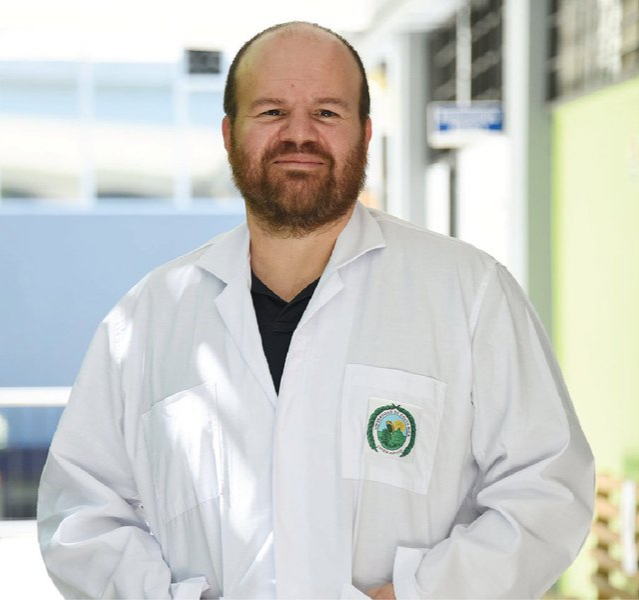
Dr. José Arturo Molina Mora (Ph.D.) is a Full Professor and scientific researcher at the University of Costa Rica. He has a multidisciplinary background in Microbiology and Clinical Chemistry, Mathematics, and holds both a Master’s and a Ph.D. in Bioinformatics. He has coordinated and contributed to more than 40 projects in research, teaching, and training, focusing on data analysis in biosciences, pathogens—particularly antimicrobial resistance—and human genomics. His work
has resulted in over 75 scientific publications.
He collaborates as a researcher with the European Bioinformatics Institute (EBI) in London, United Kingdom, and the Human Phenome Institute in Shanghai, China. His contributions to research and education have been recognized with national and international awards for professional excellence and innovation, particularly for his pioneering role in advancing bioinformatics and artificial intelligence in biosciences across Costa Rica and Latin America. He currently serves as the Latin American coordinator of the BiotrAIn project, which focuses on the application of AI in bioscience research.
Bioinformatics and Artificial Intelligence Applied to Biosciences and Health: A 15-Year Journey in Research and Training
This talk presents our experience in implementing Bioinformatics and Artificial Intelligence (AI) in biosciences and health through a range of research and training initiatives developed over the past 15 years in Costa Rica and Latin America.
Beyond generating scientific contributions in areas such as pathogen genomics, antimicrobial resistance, and human diseases, our work has also focused on strengthening local capacities and promoting active engagement as equal partners
within the international scientific community.
The presentation will highlight selected case studies, including the development of pathogen data portal, efforts to expand the representation of Latin American genomic data in global databases, and the optimization of molecular diagnostic tools. In addition, we will showcase AI-driven approaches to integrate genomic and phenotypic data, with applications in priority antimicrobial-resistant bacteria and biomarker discovery in cancer and other chronic diseases.
Overall, this talk provides an overview of initiatives that have had a significant impact at both local and regional levels in Costa Rica and across Latin America, driven by collaborative research and capacity-building programs.
 Andrés Morena-Estrada
Professor, Principal Investigator 3B, SNI III, Cinvestav Research Center,
Mexico City, Mexico
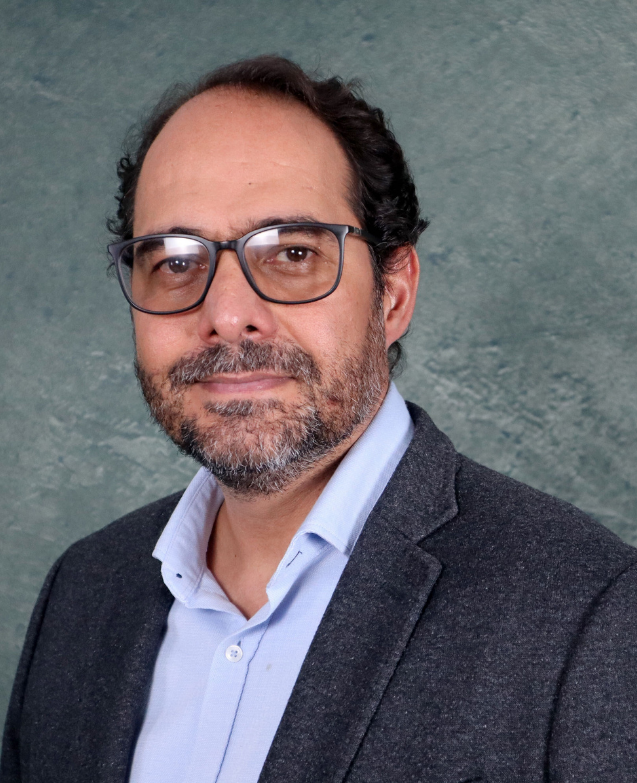
Dr. Moreno received his medical degree from the University of Guadalajara in Mexico (2002) and is a specialist in human genetics with a postgraduate degree in biomedical research from Pompeu Fabra University in Barcelona, Spain (2009) and completed postdoctoral training in population genomics from both Cornell University, New York, and Stanford University, California, USA (2010–2014); where he later served as a research associate before returning to Mexico in 2015.
He is the author of the most detailed study of the genetic structure of the Mexican population, including the first genomic description of 20 indigenous groups from various regions of Mexico. He demonstrated that the genetic composition of Mexico's cosmopolitan population reflects the substructure of the ancestral lineages of local indigenous roots. He showed that these genetic differences have important implications for traits of biomedical and clinical interest. The study was published in the journal Science in June 2014.
Ever since Dr. Moreno has extended his research to describe the genetic map of indigenous and admixed populations across Latin America and other regions underrepresented in genomic studies, including the Caribbean (PLOS Genetics 2013), South America (PLOS Genetics 2015, AJHG 2022), Oceania, and Polynesia (Nature 2020 and Nature 2021). He currently leads the Mexican biobank project (MX Biobank), generating the first genomic catalog of the Mexican population with nationwide coverage and associated biomedical traits, which was featured on the cover of Nature (October 2023) and later in the cover of Nature Medicine (February 2026). These studies have contributed to improving the representation of understudied populations in global genetic variation catalogs.
For his research in biomedicine among Latin American populations, he was recognized in 2012 with the George Rosenkranz Prize for Health Care Research in Developing Countries, awarded by the Institute for International Studies (FSI) at Stanford University. He has trained more than 25 international students in Europe, the United States, and Latin America. He has authored more than 70 peer-reviewed publications with over 32,000 citations, including high-impact journals such as Science, Nature, PNAS, Cell, Nature Genetics, Nature Medicine, AJHG, and PLOS Genetics, among others. He is member of multiple international advisory boards, including the UK Biobank and the GWAS Catalog. From 2015 to 2021 he was Director of the Genomic Core Facility of the National Laboratory of Genomics for Biodiversity (LANGEBIO, Mexico). He is currently Principal Investigator of the Human Population Genomics Laboratory at the South Campus of Cinvestav in Mexico City. He has launched several international initiatives such as the LatinGenomes network funded by Wellcome Trust to build a Latin American Pangenome, and the LatinCells consortium funded by the Chan-Zuckerberg Initiative (CZI) to create a single-cell map of immune diversity from Latin America, contributing to the diversity of global efforts such as the Human Cell Atlas.
Population medical genomics in Latin America
Genetic data is transforming our understanding of human diversity and disease risk. Latin America is among the regions that concentrate most of the biodiversity of the planet, including ethnic, linguistic, and cultural diversity of Latin American ancestries. However, despite the globalization of biotechnologies to analyze the human genome, indigenous populations from the Americas remain underrepresented in large-scale genomic studies. In this talk, I will discuss recent efforts to characterize the genetic profile of Indigenous Americans throughout the continent, including regional approaches across Mexico, South America, and the Pacific, as well as ongoing biobanking efforts in these regions. This topic poses challenges and opportunities to adequately study human diversity and its implications in health care. Genomic research should promote inclusion of underrepresented ancestries while ensuring a framework of respect and culturally appropriate engagement with participant communities, so that the benefits from precision medicine are truly global and equitable.
 Deisy Morselli Gysi
Professor of Statistics, Federal University of Paraná
Curitiba, Brazil
Dr. Deisy Morselli Gysi is a Professor of Statistics at the Federal University of Paraná (UFPR). A former Associate Research Scientist at BarabasiLab (Northeastern University) and Research Trainee at Harvard’s Channing Division of Network Medicine, her research merges Network Science and Machine Learning to drive advancements in Precision Medicine. Her work focuses on unraveling complex disease mechanisms, network-based drug repurposing, biomarker discovery, and ncRNA-mediated interactions. Dr. Gysi holds a Ph.D. from the University of Leipzig and is dedicated to developing innovative, network-driven methodologies to decode complex diseases and accelerate targeted, individualized therapeutics.
Network Medicine: From ncRNAs to arbovirus and endemic diseases in South America
The complex landscape of human disease demands a paradigm shift from traditional single-gene approaches toward a systemic, holistic framework. Network Medicine offers this transformation by leveraging the synergies of Network Science and Machine Learning to map the intricate web of molecular interactions driving pathogenesis. While recent milestones—including the 20th anniversary of the Human Genome Project—have spotlighted non-coding RNAs (ncRNAs) as vital, high-potential regulators in disease networks, their integration into predictive models opens a new frontier for precision diagnostics and therapeutics.
This talk explores the scalable power of network-driven methodologies, moving from the microscopic lens of ncRNA-mediated interactions to the macro-challenges of pressing public health threats in South America. We will examine how complex network architectures, network-based drug repurposing pipelines, and predictive algorithms can be deployed to decode the mechanisms of prevalent arboviruses (such as Dengue, Zika, and Chikungunya) and local endemic diseases. By mapping host-pathogen interactomes and identifying critical network vulnerabilities, this research demonstrates how advanced statistical modeling can accelerate targeted therapeutic discovery, optimize healthcare interventions, and pave the way for localized, data-driven precision medicine.