

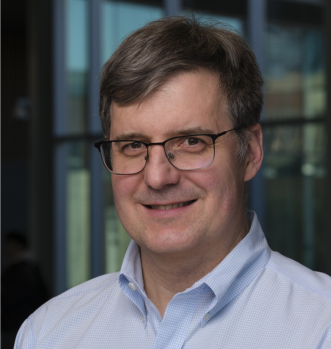
Mihai Pop
Professor, Department of Computer Science and
University of Maryland Institute for Advanced Computer Studies
MPower Professor, University of Maryland Strategic Partnership: MPowering the State
Co-Director, University of Maryland Center of Excellence in Microbiome Sciences
United States
Mihai Pop is a professor of computer science and co-director of the University of Maryland Center of Excellence in Microbiome Sciences. He develops computational approaches for analyzing microbial communities, particularly for characterizing their strain-level diversity. Other interests include biological databases, antibiotic resistance, and software testing. His lab has developed several widely used open-source software tools for the analysis of genomic and metagenomic data, including software for sequence alignment, genome and metagenome assembly, sequence clustering, and for assessing metagenome associations with phenotypes. Pop teaches at all academic levels and is a strong advocate for inclusion and diversity within the scientific community. He has a particular interest in developing open educational resources for computer science and bioinformatics and he seeks new ways to engage students and promote critical thinking and learning in his classes. Pop holds a B.S. (1994, Politehnica University in Bucharest, Romania), and a Ph.D in Computer Science (2000, The Johns Hopkins University), and has joined the University of Maryland in 2005. He is an MPower Professor, University of Maryland Strategic Partnership: MPowering the State, and fellow of the Association of Computing Machinery and of the International Society for Computational Biology.
My Long and Winding Road to Computational Microbiome Analytics
I am a professor in a top computer science department, and recently stepped down from the leadership of a major interdisciplinary research institute. My lab conducts cutting-edge research in computational methods for analyzing biological data, particularly data derived from complex microbial communities. Arriving to this point in my career was not the result of a carefully planned strategy, but the outcome of a winding path defined by successes, failures, and many changes of direction. In my talk I will recount my journey and highlight both its low points and the science that inspired me to keep moving past setbacks. I will conclude with some advice for those who are just at the beginning of their academic journey, facing the uncertainties of an unpredictable future.