
Links within this page: Fabrice Lucien-Matteoni | Mark Hoffman | Teresa Przytycka | Iddo Friedberg
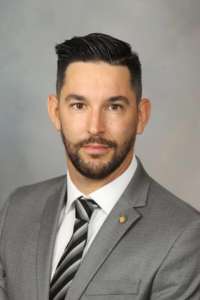 Fabrice Lucien-Matteoni
Mayo Clinic,
Rochester, Minnesota
Time: Monday, September 28, 1:45pm
Biography
Fabrice Lucien-Matteoni’s research focuses on understanding how tumors evade the immune system and resist treatment—findings that serve as a scientific foundation for developing novel targeted therapies and immunotherapies for human cancers.
A central thread of his work is the cancer surfaceome: the proteins cancer cells display on their surface to suppress immune responses. By mapping and characterizing these proteins, his lab identifies promising targets for therapeutic intervention, including in cancers with mutations that are otherwise difficult to drug. His team uses advanced proteomics, functional assays, and animal models to pursue this work.
Lucien-Matteoni also investigates tumor-derived extracellular vesicles, which play a role in shaping an immunosuppressive tumor environment. His lab is developing EV-based liquid biopsies as noninvasive blood and urine tests for cancer detection and treatment monitoring, with a particular focus on urologic cancers including prostate, bladder, and kidney, as well as pediatric rhabdomyosarcoma.
His research is multidisciplinary by design, involving surgeons, oncologists, pathologists, and the biopharmaceutical industry to move discoveries from bench to bedside.
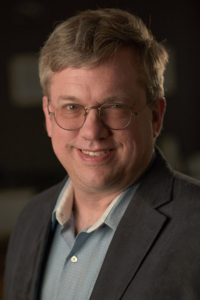 Mark Hoffman
Children’s Mercy Research Institute, UMKC School of Medicine,
Kansas City, Missouri
Time: Tuesday, September 29, 9:00am
Biography
As the Chief Research Information Officer (CRIO) for Children's Mercy and the Children's Mercy Research Institute, Mark Hoffman leads a team spanning software development, high-performance computing, bioinformatics, and data science. His role centers on accelerating and improving research through data, applications, and technology.
Hoffman holds a B.A. in Molecular Biology from William Jewell College and a doctorate in Bacteriology from the University of Wisconsin-Madison. Before joining Children's Mercy full time in 2016, he spent nearly two decades at Cerner, rising to Vice President for Genomics and Research, and later founded the Center for Health Insights at the University of Missouri Kansas City.
His formal training in research and his experience in software development position him to bridge the needs of researchers with the capabilities of technology. He is an inventor on 25 issued patents and a member of the American Academy of Inventors. His current work focuses on innovative approaches to using informatics and data to advance health and research equity.
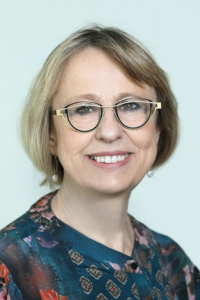 Teresa Przytycka
National Library of Medicine (NLM), National Institutes of Health (NIH),
Bethesda, Maryland
Time: Tuesday, September 29, 1:00pm
Biography
After receiving a Ph.D. in Computer Science form the University of British Columbia, Vancouver, Teresa Przytycka's research has been concentrated on the theory of algorithms until, as a Sloan/DOE Computational Biology fellow, she started to apply algorithmic approaches to problems in Molecular and Systems biology. As an NIH Senior Investigator, she is heading a research group that focuses on computational modeling and analysis of biological processes, with an emphasis on hypothesis and theory-driven questions that are enabled by large-scale data.
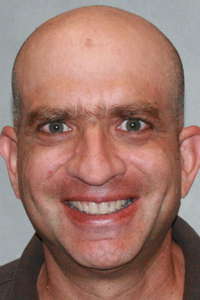 Invited Speaker: Iddo Friedberg
Iowa State University,
Ames, Iowa
Time: Wednesday, September 30, 9:00am
Biography
Iddo Friedberg is an Associate Professor in the Department of Veterinary Microbiology and Preventive Medicine at Iowa State University. His research spans large-scale analysis of protein sequence, structure, and function, genome evolution, metagenomics, and computational protein function prediction.
Friedberg leads CAFA, the Critical Assessment of Function Annotations, a global community effort to advance the computational prediction of protein function from sequence. His lab has also developed methods for studying correlations between the human gut microbiota and gene expression, with applications in infant gut development and human health, and has contributed new approaches to understanding operon and gene block evolution in bacteria.