


Links within this page: Robert Gentleman | Aleksandrina Goeva
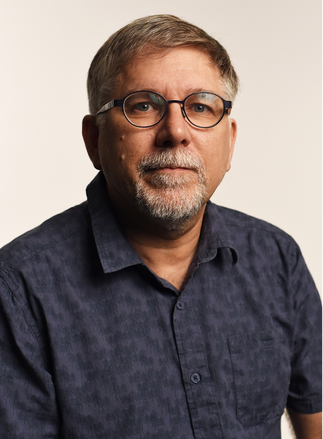
Robert Gentleman
Principal Research Scientist,
Dept of Data Science at the Dana Farber Cancer Institute
Dr. Robert Gentleman, Ph.D. is a prominent Canadian statistician and bioinformatician, internationally recognized for his pioneering contributions to statistical computing and bioinformatics. He is the co-creator of the R programming language, a foundational tool in modern data science, and the founder of the Bioconductor project, a widely used open-source software platform for biomedical and genomic data analysis.
Dr. Gentleman is the Founding Executive Director of the Center for Computational Biomedicine at Harvard Medical School. Over his career, he has held academic appointments as well as senior leadership positions in industry, including at Genentech and 23andMe.
He has been honored with the Benjamin Franklin Award in Bioinformatics and is a Fellow of both the International Society for Computational Biology and the American Statistical Association. Through his groundbreaking work, Dr. Gentleman has bridged the gap between computer science and biology, transforming how researchers analyze biological data and shaping the future of computational biology.
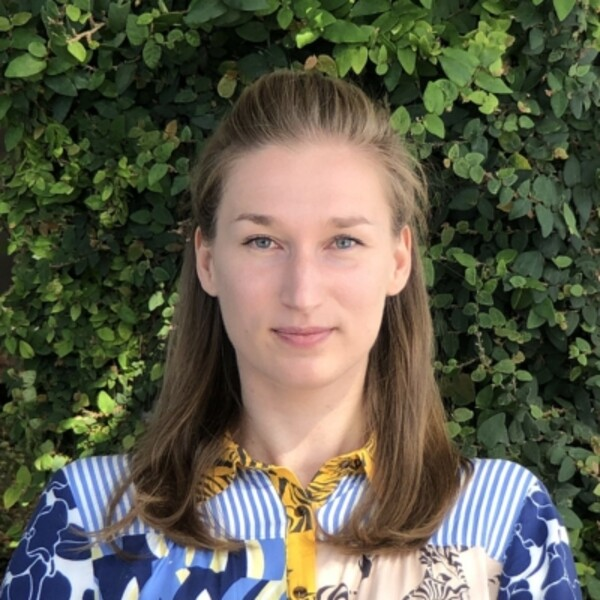
Aleksandrina Goeva
Assistant Professor, Computational Biology
Donnelly Centre for Cellular and Biomolecular Research
University of Toronto
Dr. Aleksandrina Goeva is an Assistant Professor of Computational Biology with the Donnelly Centre for Cellular and Biomolecular Research at the University of Toronto. Dr. Goeva received a BS in Applied Mathematics from Sofia University (Bulgaria), followed by a PhD in Mathematics and Statistics from Boston University (USA), where she studied complexity-penalized methods with applications to modeling queueing systems, information retrieval from text, and network inference.
She then completed her postdoctoral studies in the Macosko Lab at the Stanley Center for Psychiatric Research within the Broad Institute of MIT and Harvard (USA), where she focused on representation learning for single-cell RNA-seq and spatial data, driven by questions in neuroscience. During this time, she also co-organized the Models, Inference & Algorithms (MIA) Initiative at the Broad Institute.
Dr. Goeva’s joined the Donnelly Centre for Cellular and Biomolecular Research in 2024, where her work involves integrating mathematics and computational biology to develop new approaches to studying disease. She also shares her statistical and machine learning expertise to help other researchers re-envision problem solving.