Tuesday, July 14:
ISMB Day 3 Highlights and Recap
|
|
|
|
|
Day 3 started with recognition of our 2026 ISCB Class of Fellows before another fantastic keynote address and a full day of science. In the evening those registered joined the Success Circles, our dynamic networking event where participants are grouped into small circles, each led by a knowledgeable facilitator!
A reminder for all ISCB members: The polls are open and we need your votes to help select the next Vice President and Secretary of ISCB. Here's how:
- Login at www.iscb.org
- Navigate to MyISCB
- Click the red "Vote Now" button in the top left of your MyISCB account
- Review the candidate statements
- Cast your vote!
|
|
Heat advisory in effect today
The National Weather Service has issued a heat advisory, in effect from 11 AM to 8 PM EDT today, Wednesday, July 15.
Precautionary and preparedness actions suggested are:
- drink plenty of fluids
- stay in air-conditioning
- stay out of the sun
|
|
|
Keynote Address: Carlos D. Bustamante
|
|
|
|
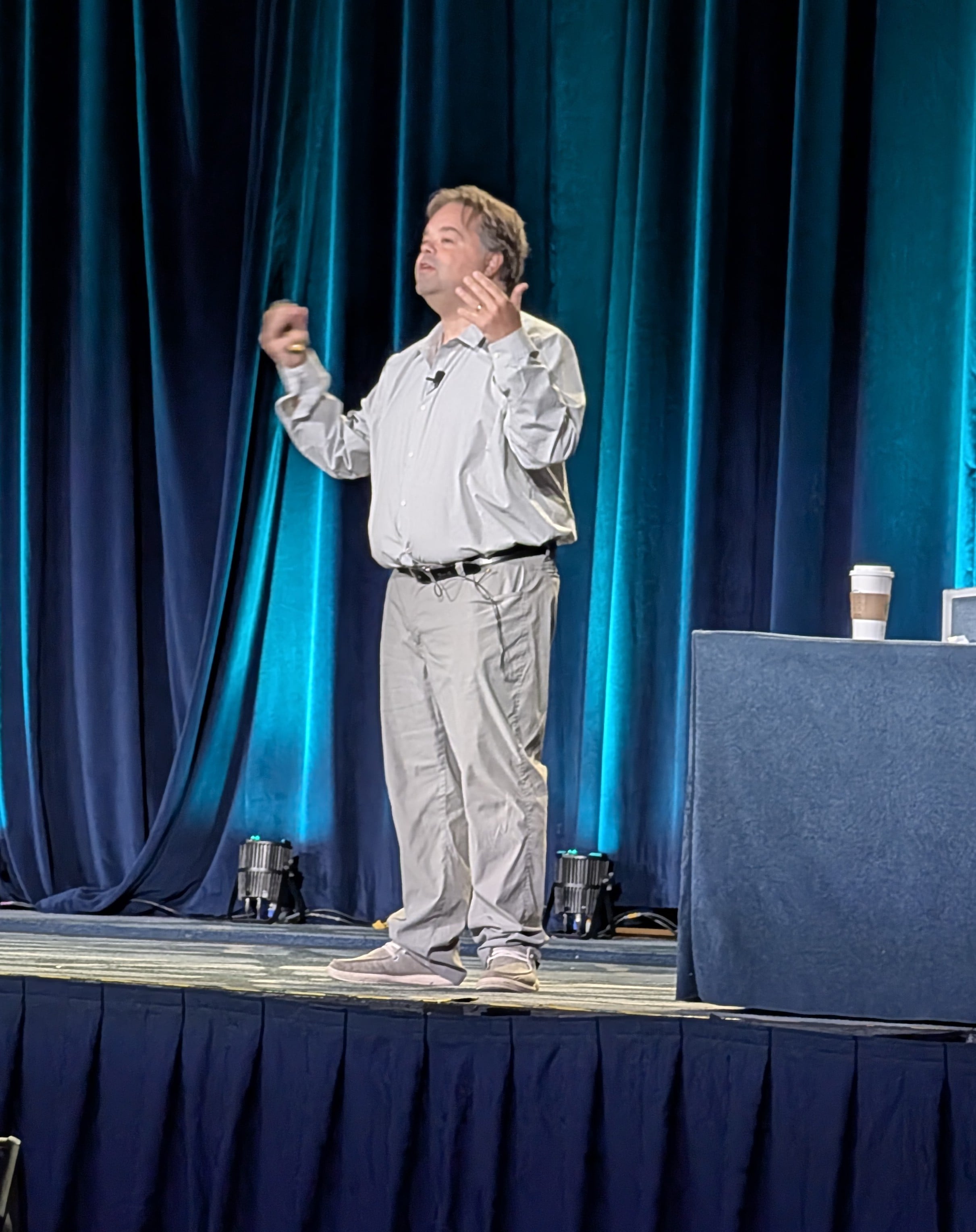
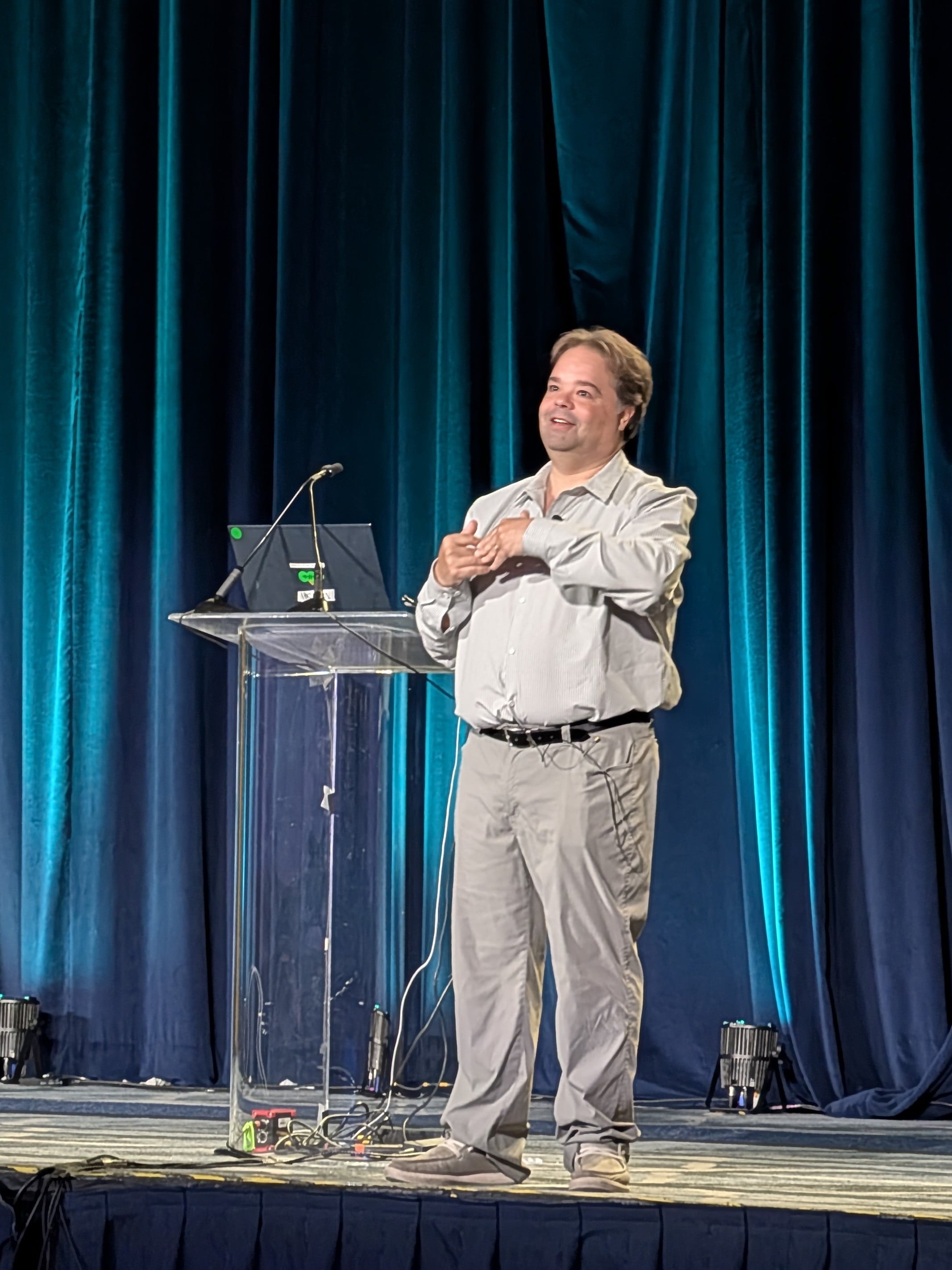
Carlos Bustamante opened day 3 of ISMB 2026 with a tour through population genetics, using it to trace human origins, ancient migrations, and genetic ancestry. He showed how genetic variation is continuous rather than categorical, undermining traditional notions of race. Mapping a genotype matrix of European individuals recovered a pattern that closely echoed the continent's geography, and similar tools applied within Africa cleanly separated groups within the continent. In African-American and Caribbean populations, he showed how overlaying commercial history, including the slave trade, onto genetic models sharpens the picture of population structure, offering a way to help reclaim the history of enslaved ancestors, including evidence of how African migration pulses originated from different regions and how a pause in the slave trade left a visible signature in present-day genomes.
He then turned to ancient DNA, from Ötzi the Iceman's surprising Sardinian ancestry, a reminder that Europe's population landscape looked very different a few centuries ago, to evidence of gene flow into Polynesia pre-dating the settlement of Easter Island, likely from contact between Polynesian seafarers and South American populations. A lighter example, driven by a postdoc's hunch that Bustamante initially doubted, found that blonde hair in Solomon Islanders arises from a different underlying gene than blonde hair in Europeans. He connected these threads to how demographic history shapes the burden of deleterious variants in populations, with expansions increasing overall genetic diversity and bottlenecks concentrating both deleterious and beneficial alleles.
Dr. Bustamante argued that human genetics is the best available tool for powering drug discovery, for both safety and efficacy, but that a decade of accelerating underrepresentation in genetic studies has left European-ancestry populations dominating datasets like the GWAS catalog, with today's polygenic risk scores several times more accurate for those of European ancestry than others. His group's response rests on a foundational thesis: combining underrepresented populations, longitudinal electronic health record access with recontact for follow-up, and genetics of health and disease to generate superior biological insight for everyone. This was catalyzed by COVID-19, where a single nasopharyngeal swab yielded paired viral and host genomic and transcriptomic data, revealing disease-related HLA associations with autoimmune conditions including psoriasis, type 1 diabetes, and anterior uveitis.
This work grew into Galatea Bio and the Biobank of the Americas, including a Colombian cohort of 25,000 samples enriched for Native American ancestry, built to represent the broader diversity of Central and South America. He closed by weighing tradeoffs between centralized and federated data approaches, highlighting his group’s highly decentralized regression analysis (HYDRA) as a way to run decentralized regression analysis, with a long-term goal of harmonizing polygenic and phenotype risk scores across biobanks.
|
|
|
|
BioInfo-Core
The bioinfo-core COSI brings together managers and staff working in bioinformatics core facilities or similar roles around the world. In our session we had a good mix of presentations, panel discussions, and breakout groups.
Talks:
Stuart Levine - The Payoff of FAIR: From Natural Language Queries to GEO Submissions and Nextflow Samplesheets in a Bioinformatics Core.
Data management in some ways is a good fit for something the bioinformatics core should be responsible for. They have developed a wrapper around the SEEK data management project called NExtSEEK - essentially containing samples as spreadsheets and protocols as word docs. Assays connect samples. The metadata is what’s really important to have in the system, the data lives in a lake somewhere and gets pointed to wherever it is. They have added Nessie, an assistant to do easy queries and more complex tasks (GEO submission). They want to add more complex jobs to it eventually (data ingestion).
Nathan Kennedy - An R Package To Simplify The UK Biobank RStudio Experience
After an entertaining introduction to the pain users face when using the UK Biobank Research Analysis Platform (a bespoke cloud based computing infrastructure), we were shown the very approachable R package allowing the user to do things like create projects, install packages, download data, and download a project for later use. http://github.com/natedog0027/UKBEasieR
Patricia Carvajal-López - Scaling up support for bioinformatics core facilities training
While the previous training course from EMBL-EBI will not be available in 2026, they will be doing versions of the course in the LATAM (ISCB-Latin America) conference in Peru and one hosted by the African Bioinformatics Institute. Previous training materials are also available in the EBI platform and other options for sharing and hosting training materials were discussed, as well as the previous work on the ISCB competency framework for bioinformatics core facility scientists.
Sabiq Chaudhary - A Hybrid-Cloud Nextflow NF-Core Compliant Framework for High-Throughput Bioinformatics Pipeline for Roche SBX Sequencing
This talk covered Roche’s transformation of a legacy pipeline into a modular architecture aligned with nf-core and capable of handing diverse assay types over tons of data across multiple environments. They highlighted the internal interface for flexible configuration plus the monitoring and testing that keep it reliable.
Thomas C. Smits - HuBMAP Workspaces: an integrated analysis environment for the Human BioMolecular Atlas Program Data Portal
HuBMAP (Human BioMolecular Atlas Program) is a data repository for multi-modal spatial and single-cell from healthy human tissues with > 5k data sets. They have added embedded workspaces to allow users to run Jupyter notebooks (e.g. running both R and python) on the data directly within the system. They also include analysis templates that enable users to get started with different types of analysis easily. http://portal.hubmapconsortium.org/workspaces
Muruj Tukruni - Telomere-to-Telomere Genome Assembly of Native Desert-Adapted Sheep Ovis aries Breed “Najdi” From Saudi Arabia
There is an indigenous sheep adapted to extreme arid conditions that had no genome despite its high economic value as an agricultural animal and interesting adaptations. Using pacbio, nanopore, and Hi-C data, they were able to assemble two (male and female) genomes to a T2T level with excellent completeness. They have put their pipeline on github.
Panels:
Agents in the core: How your core is using agentic AI (or how it should be)
Panelists: Stuart Levine, Philip Freda, Natalie Gill, Yury Bukhman
Leaders closer to the cutting edge of AI use answered various questions from the audience about the use of agentic (and AI in general) in cores, covering topics from training to cost to pitfalls and reproducibility.
In with the new: Case studies on how cores bring in a new data type or technology
Panelists: Reuben Thomas, Ryan Dale, Lara Ianov, Hua Li
People from several different cores spoke about bringing in new technologies: Xenium, single cell, and long reads. They dealt with everything from how to find the resources or time to do so, what the process has looked like for their core (in good and bad situations), decisions they had to make around data retention, addressing the delay to other projects. It seems in most cases cores are treating this as an on demand task but occasionally have the ability to take the time to really explore and bring something in after more robust examination. People expressed that AI will likely mean getting less of the routine work in the future. Will “Second Eye for AI” be a service provided by cores (check my AI code)? Perhaps cores will be creating agents, skills, and MCPs for end users to do their own analysis.
Breakout groups:
We broke into two breakout groups based on what the people in the room were interested in discussing.
Agentic AI:
We longed for an AI user with less permissions or other strategies for keeping an agent isolated from stuff. /sandbox and singularity were mentioned as possibilities. As far as training users, we have processes to train people on explosive chemicals, so why not teach them and make them take a test at the end, they don’t get to use it until they at least have been made aware of some risks. Agents were discussed as developing an agent for a particular well defined task - i.e. grant review trained on old grants. Telling Claude to use “Superpowers” makes it do a lot more software engineering type stuff but will take longer and use more tokens. Performance declines with token usage and permission issues might also start cropping up, so besides just using money you want to be judicious about how you’re burning tokens. Different models do sometimes make correlated errors since they were trained on the same corpus essentially. We’re going to post some AI fluency workshop materials to our mailing list and slack.
New Tech:
They had a diverse group in terms of industry / academia / different roles. They discussed pricing models for new technology, deciding when to use something new versus something more established, and got into some agricultural genomics where a genotype array can tell you quite accurately how much milk a given cow was going to produce!
|
|
|
|
|
BOSC
The Bioinformatics Open Source Conference (BOSC, open-bio.org/events/bosc/), now in its 27th year, started this morning with a joint session with the Bio-Ontologies and Knowledge Representation (BOKR) COSI. The BOSC/BOKR session covered topics including metadata and annotation representation, knowledge graphs, and sustainable ontology infrastructure. The FAIR data principles (Findable, Accessible, Interoperable, Reusable) were a common thread running through many of these talks, reflecting the intersection of BOSC (open and reproducible science) and BOKR (knowledge representation).
After lunch, Maryam Zaringhalam of the Center for Open Science gave a keynote talk, “Science for the People: Open science to engage and build trust with communities.” Drawing on public survey data, Maryam challenged the familiar claim that the public simply does not trust science. As she put it, “Trust is something that we must work to earn and retain. Open science and public engagement can help us do just that.”
Earning that trust requires scientists to communicate both competence and warmth. People need confidence in a speaker’s expertise, but they also need to understand the speaker’s motivations and recognize that their own experiences and concerns are being taken seriously. Storytelling can help establish that connection by making scientific work more understandable and by showing the people, choices, and values behind it.
The first BOSC panel, “Policies and Strategies for Resilient Open Science,” examined how we can ensure that essential research infrastructure is preserved amid shifting political priorities, limited budgets, security concerns, and increasingly complex data-sharing laws.
Moderated by Mónica Muñoz Torres, the panel featured Maryam Zaringhalam (today’s keynote); Ann Nowakowski of Sage Bionetworks; Mallory Freeberg of EMBL-EBI; Guy Cochrane of the Global BioData Coalition; and Sam Halabi of Georgetown University.
A key focus was the fragility of open-science infrastructure. Large scientific ecosystems often depend on a small number of funders, leaving widely used resources vulnerable to a single budget cut or policy change. Sustainable funding is also difficult when the full costs of maintaining infrastructure – including data preservation, user support, security, compliance, and continued development – are not clearly understood.
The discussion emphasized that resilience means more than keeping services online. Research infrastructure must also adapt, innovate, and respond to changing community needs. This will require better funding models, clearer accounting of costs, and greater collaboration among funders, institutions, governments, and resource providers.
Panelists also considered the relationship between openness and security. These principles do not have to be in conflict. Effective systems should distinguish between data that can be openly shared and data requiring controlled access or additional safeguards, rather than treating security as a blanket reason to restrict scientific exchange.
The panel concluded that resilience depends on more than technology. It requires durable funding, transparent costs, proportionate security, international coordination, interoperability, and meaningful participation from the communities that create and use scientific data.
Day 1 of BOSC ended with a session on Workflows & Pipelines, always popular topics at BOSC. Nearly every bioinformatics project needs to employ some sort of workflow; the emphasis at BOSC is on reusable, reconfigurable component-based approaches. (Yes, this is still relevant even in an era when you can ask a generative AI assistant to design a pipeline from scratch for you.)
We invite you to join us for our exciting Day 2 program, which will start with a keynote talk by Eric Green, who was one of the drivers of the Human Genome Project and is now Chief Medical Officer at Illumina.
|
|
|
|
|
HiTSeq
The day opened with our invited talk by Mihaela Pertea, "From Reads to Transcripts to Biological Insight," a masterful tour from raw sequencing reads through transcript reconstruction to the biology that matters -going from transcript identification, quantification, differential isoform usage all the way to biological significance.
The proceedings then rolled on with Weijian Wang (UCLA) presenting scVarSim, a unified simulator for benchmarking variant calling and RNA-editing detection in single-cell RNA-seq; Xiuwei Zhang (Georgia Tech) on spatiotemporal cell-type deconvolution leveraging tissue structure; and Jacob Tye (University of Utah) with MethylSeg, context-aware methylome segmentation for robust PMD detection.
The afternoon brought a strong methods lineup: Amaranth (Xiaofei Carl Zang, CHOP) for single-cell transcript assembly, Minerva (Ayse Keskus, NIH) for allele-specific copy-number inference in long-read cancer genomes, and Yanmei Dou (Westlake) on genome-wide mosaic microsatellite mutations at single-cell resolution. SQANTI-epi (Tianyuan Liu, I2SysBio-CSIC, Spain) showcased functional and quality annotation of single-molecule epigenomic data, followed by Sang Yoon Byun (UCSD) on likelihood-based copy-number estimation for paralogous genes. After the break, Seqwin (Michael X. Wang, Rice) delivered ultrafast signature-sequence identification, with pHapCompass, allele-specific modification QTLs from long-read RNA-seq, and CRANE rounding out the day.
But let's be honest about the real headline: Spain won semifinal match of the World Cup during the afternoon session and classified to the Final!!!!
- First goal - Oyarzabal - struck right in the middle of the SQANTI-epi presentation.
- Second goal - Porro - landed during the coffee break.
- Final result: 0-2 for Spain - confirmed during the Seqwin proceedings talk.
A great match during a yet another great HitSeq conference!!
HitSeq best talk and best poster winners will be announced during the closing ISMB2026 ceremony.
|
|
|
|
|
iRNA
For the second day of the iRNA COSI, talks converged on the detection and quantification of alternative splicing and alternative isoforms, RNA processing and translation and their study as an underappreciated regulatory layer in disease, not just gene expression. We started the iRNA day with a keynote from Olga Anczuków from the Jackson Laboratory for Genomic Medicine who discussed the use of long-read sequencing of breast and lung tumors identifying thousands of novel cancer isoforms and showing that aging itself drives much of the splicing remodeling in tumors, positioning these changes as early, preneoplastic events rather than purely cancer-specific ones. The work further identifies novel isoforms and splicing regulators to have direct clinical relevance as actionable biomarkers and therapeutic targets. Throughout the day, long read sequencing including with spatial and single-cell resolution were the dominant technologies from talks chosen from abstracts and proceedings, collectively demonstrating that the transcriptome complexity and regulation is far greater than originally thought and several new computational/ML tools were described to improve its characterization. We finished the day with a keynote address from Can Cenik from the University of Texas at Austin who discussed the compilation of thousands of translation experiments and the measure of translation efficiency covariation, showing that functionally related transcripts and protein-complex members tend to be translated in a coordinated way. Building on this compendium, the team developed RiboNN, a deep learning model that predicts mRNA translation rates from sequence alone and can assess how genetic variants affect translation, with applications in disease diagnostics.
|
|
|
|
|
NetBio
We had a fantastic first day at the NetBio COSI! The day opened with a series of talks on metabolic networks, exploring how network topology shapes metabolic dynamics and function. In our first keynote, Zoran Nikoloski introduced a structural framework for identifying kinetic modules, which are functional units of metabolic networks whose identification can enable substantial simplification of metabolic models. Emma Lee presented a context-specific approach that integrates gene expression with genome-scale metabolic models to identify metabolic communities active during ovarian follicle development. Neha Sontakke described BLIMMP, a Bayesian framework for inferring the presence of metabolic pathways from incomplete bacterial genomes or metagenomic data. Yuanchao Zhang presented a random walk-based local pathway enrichment method that leverages network flow through metabolic reaction networks.
The late afternoon session shifted toward network methods for biomedical applications, focusing on a broad range of human diseases. Most Tahmina Rahman presented DyGraphTrans, a temporal graph neural network framework that models disease progression from longitudinal electronic health record data. Mathew Fischbach demonstrated how modeling genetic interactions can improve machine learning models for Parkinson’s disease risk prediction. Benedict Anchang presented a dynamic gene interaction network approach for identifying cancer driver genes from single-cell data. Parham Hadikhani demonstrated that sample-specific miRNA regulatory networks inferred with a sparsity-aware LIONESS approach identify reproducible network rewiring associated with asthma. Finally, Gizem Cicekli introduced BIRDccNEST, an unsupervised framework for characterizing cells and defining trajectories in scRNA-seq data through inference and topological analyses of directed cell-cell relationship networks.
Across the sessions, a common theme emerged: network structure, dynamics, and context provide powerful new ways to extract biological insight from increasingly complex datasets.
🙌 A huge thank you to all speakers, attendees, and organizers!
Please join us today for Day 2 of NetBio!
📣 For those registered: don’t forget our Social Networking for Network Biologists event at City Tap House Dupont from 7-9pm tonight (Wed, July 15)!
|
|
|
|
|
RegSys
The second day of RegSys started off with a keynote by Shaun Mahony who talked about how we can interpret deep learning models that predict function from sequence. While many different types of such models were developed, methods for interpretability fall a little short. For example, extraction of biological motifs that can be assigned to transcription factors or interpreting tokenized input are difficulties. He explained prior work called the concept activation vectors (TCAV) as a way to learn state vectors that explain nodes from the neural network that are used for a specific signal or pattern in your input. They tried this approach for TF motifs as concepts, but it did not work well, most likely because many correlated neurons are representing the concept. Thus, he suggested to use PCA to simplify the variation in the vectors (TPCAV) which improved the ability to use concepts on DNA models for different TFs. He showed that the same idea can also be applied to models that use sequence and ATAC signal as input or tokenized models or even chromatin states giving rise to a number of possible applications in functional genomic model interpretation.
Jacob Schreiber introduced Cherimoya, a new sequence-to-function model, that uses ConvNext blocks to reduce size and other optimizations. Overall, it has much fewer parameters than other SOTA models but showed similar performance for function prediction and reduces the performance gap to models that have a larger receptive field. Cherimoya allowed faster training and thus appears particular useful if many models need to be learned.
Elizabeth Gilfeather talked about how sequence-to-function models can be made smaller without reducing performance. She suggested to decompose linear layers in large models using SVD and then use the reduced matrices for model inference. Application to different models, showed that performance reduction can often lead to much smaller parametrized models that perform similar or even better depending on the applications.
Yuri Pritykin talked about the use of sequence-to-function models to understand the 3D genome using high resolution Micro-C data from drosophila. He introduced the domino model to predict chromatin insulation scores along the genome. From attribution analysis of this model, they discovered many DNA motifs that capture context-specific insulation, which they could also experimentally verify.
Doruk Cakmakci rounded up the talks about sequence-to-function (S2F) models with a proceedings talk. He suggested a complementary DNA-aware evaluation of S2F-
predicted and experimental functional genomic tracks. By studying the DNA-dependency of experimental and S2F-predicted tracks, using track-conditional genome language models, he reported a masked DNA-decodability gap. This finding can be explored to better understand what S2F models are learning and were further improvements may be useful.
Yeojin Kim presented stORCA a method that allows to discover differentially spatially expressed genes from spatial transcriptomics data. It learns condition-invariant cell and niche representations and uses optimal transport for cell with subsequent statistical tests for discovering differential expression and illustration on two different datasets illustrated its use.
Xiuwei Zhang presented LineageMap a method for reconstructing lineage trees from spatial transcriptomics data with lineage barcoding of cells. A likelihood based approach for reconstruction of lineage trees that considers barcode and cell state similarity as well as cell spatial migration. This approach is an extension of the TedSim method from the lab.
Benchmarking against baseline methods showed that LineageMap performed best and offers a new approach for the analysis of these tri-modal datasets.
Amin Emad presented Cellpace a method for modelling the dynamics of scRNA data, able to predict expression in missing timepoints. Cellpace is a time-aware model based on a transformer and diffusion-based architecture and was shown to better predict expression of different cell types compared to many other SOTA methods. Application to real data illustrates the Cellpace can reconstruct data from a missing timepoint or augment measurements of a state not well represented in the data.
Donglu Bai talked about an interpretable model that uses scRNA-seq, bulk RNA-seq and bulk proteomics. The scRNA-seq is used to infer transcriptional burst kinetics, bulk RNA-seq is decomposed using single-cell references and the computed decomposition weights are applied to the proteomics data. Inferred burst kinetics of genes were compared to chromatin accessibility data and predicted protein abundance compared to measured CITE-seq measurements. Comparing predicted transcription rates versus protein rates were used to define a statistical test that allowed to prioritize genes that are translationally regulated.
The final talk in the second session was by Mingyue Wei about the proceedings paper R4ST, a method designed to complete spatial transcriptomics data. R4ST leverages scRNA-seq data as a reference and employs dual learning channels based on graph inductive and transductive modeling to capture complementary spatial topology information in Spatial transcriptomics
data, enabling accurate reconstruction of missing gene expression.
The final session of RegSys started with a keynote by Bianca Dumitrascu, who talked about how the morphogenesis of organs can be simulated using biophysically inspired computing. She suggested to model self-organization as a multimodal computing unit, where a cell is the central computing unit. The operations a cell can do are things such as growing, cell movement and others that underlie biophysical models but also gene regulatory logic that describes molecular properties that influence cells. She designed waxMorph, a forward simulator that can start from a small tissue sample of cells and simulate how the organ develops.
Ferhat Ay presented MARCA a method for the detection of multi-locus interaction patters in contact maps at high resolution. These patterns should be more flexible than simple two-locus interactions. MARCA uses a Hessian-based filter and customized response function on contact matrices to highlight interesting patterns. Application to cell cycle data showed that MARCA can detect microcompartment boxes and anchors in the HiC maps and supports analysis of these structures during cell cycle regulation.
The final talk was given by Abhishek Pandeya who talked about the reconstruction of 3D genome structures using TAD-sized regions as building block. A graph-attention model is used to predict 3d coordinates of TAD regions, which are then assembled into higher-order structures that minimize distances from HiC data.
|
|
|
|
|
SysMod
The 11th annual SysMod meeting, co-chaired by Peter D. Karp and Andreas Dräger, explored how mechanistic and data-driven modeling approaches can help understand biological systems across scales. Shayn Peirce-Cottler opened the scientific program with multiscale models linking single-cell decisions to tissue-level disease, while Jason Papin highlighted how microbial metabolic models can predict function and support therapeutic development.
Across three sessions, contributed talks covered disease and therapeutic modeling, multiscale systems biology, network modeling, and dynamic cellular state transitions. Approaches ranged from agent-based and mechanistic ODE models to stochastic graph transport, physics-informed neural networks, flux balance analysis, and genome-scale metabolic modeling. Applications included cancer, immune responses, microbial metabolism, plant defense, and the reconstruction of cellular dynamics from single-cell data.
Selected poster contributions were highlighted in short pitches before the poster session. The SysMod Poster Awards went to August George for ChatGEM, an agentic system for in silico genome-scale metabolic engineering (3rd place), and to B. Adam Bates for investigating how data selection affects automated genome-scale metabolic network reconstruction (2nd place). The jury selected Ricardo A. Vialle’s work on integrative multi-omics analysis of heterogeneity in Alzheimer’s disease for 1st place.
Together, the talks and posters reflected the growing methodological breadth of computational systems modeling while emphasizing a shared goal: turning biological data into interpretable and predictive models of biological systems.
|
|
|
|
|
The Success Circle event this year featured 10 focused discussion tables which included:
- Best Practices to Obtain Grants
- Non-Traditional Science Roles
- From Genome to Field: How Data Science is Powering the Next Wave of AgBiotech
- Contributing to the Computational Biology Ecosystem in the Age of AI
- How can we Train our Communities to do Green Computing?
- What if you get negative results?
- Priorities in Bioinformatics Education: Building an AI-Literate Workforce Without Ceding Critical Thinking to AI
- Ethics of Doing Science
- Dealing with Interpersonal Conflict and Difficult Individuals
- Responsible AI Use in Computational Biology
The event offered a valuable opportunity for attendees to share experiences, explore challenges, and expand their networks in an engaging, conversational setting. Big ideas and even bigger conversations made the night a success!
|
|
|
|
Happening Today: Wednesday, July 15
|
|
|
|
- 8:40am – Welcome and Day 4 Distinguished Keynote: Partha P. Majumder
- 10:00am and 4:00pm – Caffeinate and Connect with Posters and Exhibitors
- 1:00pm – Lunch
- Click here for the ISMB 2026 Dining Guide
- Track sessions:
|
|
|
|
|